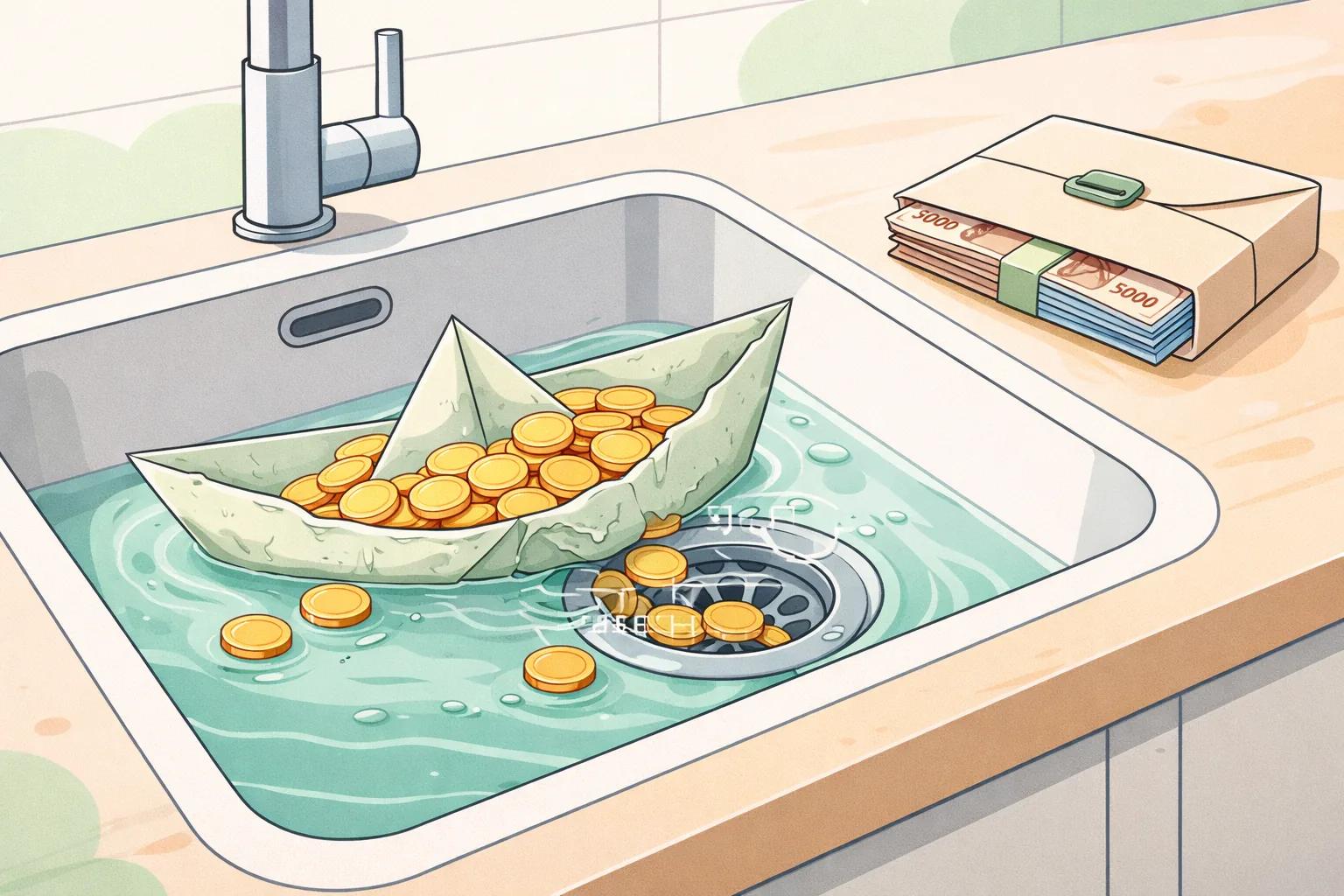

Money ran out before the month did.
You’ve got $24.67 left, payday is six days away, and your head is already full of “musts”: food, getting around, something urgent at home. In moments like this, a budget doesn’t “fail” — it just stops being a plan and turns into a string of quick, tired decisions.
The point is simple: you don’t need a brand-new budget. You need crisis mode for a few days — clear boundaries, fewer decisions, and a way to get to payday without sliding into a bigger mess.
- Lock the payday date and list bills due before it.
- Plug leaks: subscriptions, “small” convenience buys, shopping apps.
- Calculate a daily cap for flexible spending and keep it visible.
- Pick one “allowed” fallback for a rough evening so you don’t spiral.
- After payday, fix the cause of the gap — not your willpower.
Start by plugging leaks for the next few days
When you won’t make it to payday, the problem is rarely one big purchase. More often it’s a pile of small calls no one is holding: “on the way,” “deal ends tonight,” “it’s just this once.”
Your goal today is to make sure every dollar until payday goes through one or two rules — not through impulse.
What works fastest:
- Pause auto-billing: check what will charge before payday and suspend anything you can live without for a week.
- Slow down shopping: remove one-tap checkout and hide shopping apps from your home screen.
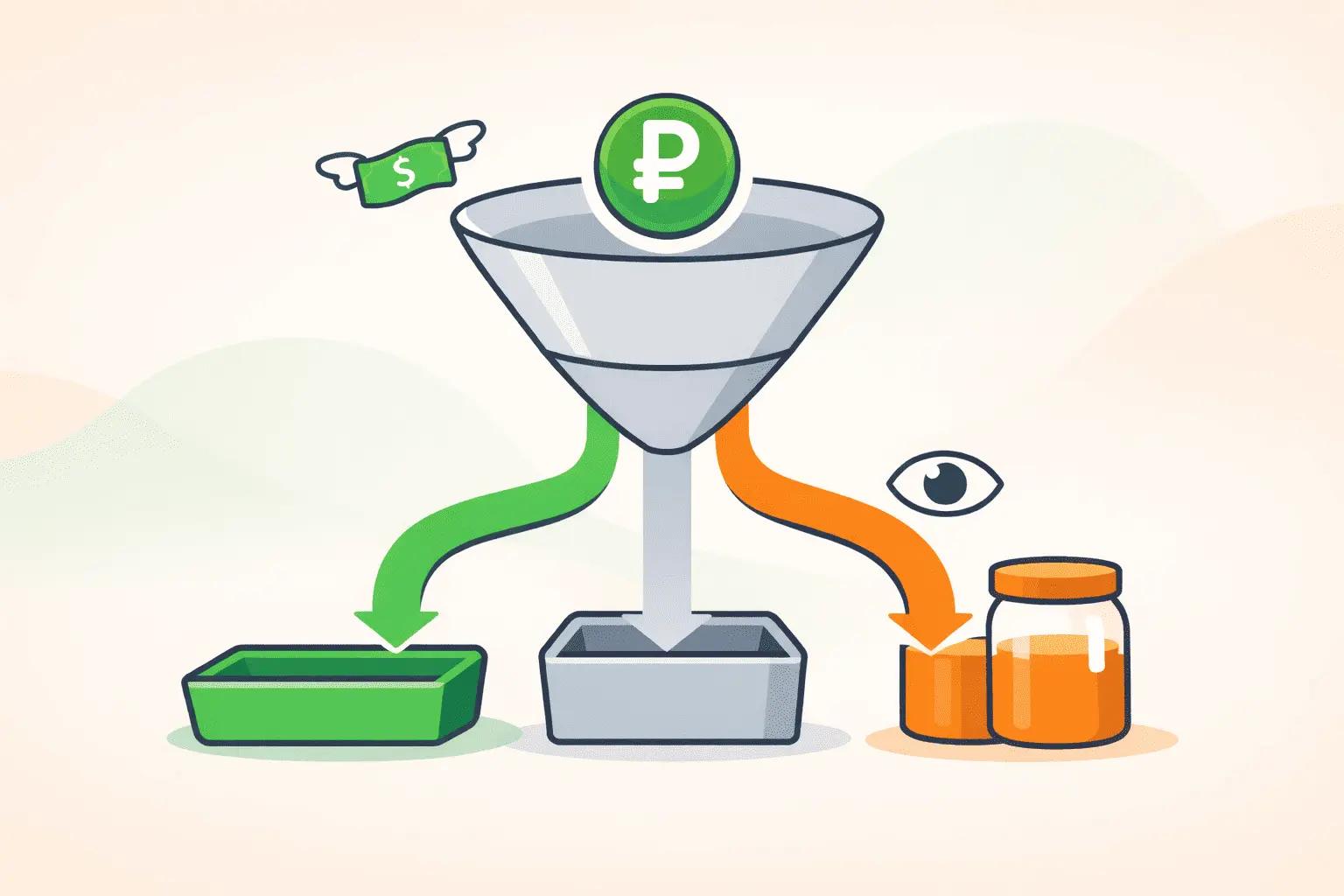
- Use one “gap” pocket: one account/card/cash envelope for the pre-payday stretch so the remaining balance is always obvious.
- Plan one or two grocery runs instead of “grabbing something” every day.
Important: You’re fixing the system, not your character.
Do the math to payday, without wishful thinking
A clear number takes 10 minutes and usually lowers anxiety on the spot. It replaces “I hope I can make it” with “this is what I’m working with.”
Make three lines:
- Current balance. What’s available right now (no “maybe money”).
- Bills due before payday. Transit, phone, meds, any fixed charges you know will hit.
- Flexible spending. What you can actually steer: food, small stuff, personal spending.
Example (swap in your numbers):
- Current balance: $165.55
- Bills due before payday: $65.66
- Left for flexible spending: $99.89
Now divide the flexible amount by days remaining. With 6 days left, that’s $16.65/day for flexible spending.
Idea: A cap isn’t punishment. It’s a way to stop “guessing” all day and start making the same decision in the same situation.
Temporary rules that get you to payday
A daily cap helps, but real life isn’t “per day.” It’s events: a bad commute, a late meeting, a drained evening. Add 2–3 rules that survive tiredness.
Pick what’s easiest to follow:
- One off-plan buy per day. One unplanned purchase is allowed; the rest waits until tomorrow.
- Food by a script. For example: groceries + one quick option (takeout) under a preset amount.
- Pause on bigger buys. Anything above your daily cap gets a 12-hour pause.
The usual pushback sounds like: “I don’t have time to track and plan.”
Then don’t plan “everything.” Do one thing: each morning, open the remaining flexible balance and ask one question — is this coming from the cap or from bills?
Five days to payday: a no-heroics spend log
In these weeks it’s not the budget that breaks — it’s attention. You’re tired, you skip logging, and later you try to rebuild reality from your bank history.
Here’s a five-day snapshot (example numbers):
- Mon: groceries $23.08, coffee $3.85
- Tue: rideshare $8.09 (running late), delivery $15.79 (“no energy” night)
- Wed: shopping app $36.35 (“deal ends tonight”), transit $2.39
- Thu: groceries $14.86, home odds and ends $5.97 (noticed after the fact)
- Fri: lunch $6.90, small group gift $13.00 (“we should chip in”)
By Friday night, the feeling is always the same: “I messed it up again.” But the pattern is right there:
- three purchases were tired-night spending (rideshare, delivery, coffee),
- one was deadline pressure (the “tonight only” deal),
- one came from social friction (the gift),
- some spending wasn’t logged until later, so it felt like it came out of nowhere.
How to fix it without heroics:
- Add one tired-night rule: delivery or rideshare — not both on the same day.
- Use the 12-hour pause for “ending tonight” deals: buy tomorrow only if you still want it.
- Give gifts and “surprise obligations” a small line item so they stop hiding inside food and household.
If this “leak” pattern repeats every month, a deeper breakdown helps: Money disappears even with a decent income.
And if impulse buys are a regular trigger, this is a good next step: How to avoid impulse purchases.
Why it feels so hard when you’re tight
When you’re short on money, your brain keeps running “how do we make it?” in the background. Mani, Mullainathan, Shafir, and Zhao (Science, 2013) showed that financial worries can tax cognitive bandwidth — as if part of your attention is constantly reserved for the problem.
One practical takeaway: don’t try to power through on willpower alone. Use rules that reduce the number of decisions you have to make each day, and give you a safe option for a rough evening.
After payday, fix the cause—not your willpower
Crisis mode is the fire hose. After payday, don’t forget what started the fire.
Three tweaks most often prevent the repeat:
- Move bills to the front. On payday, cover fixed costs first and set aside money for known charges so end-of-month isn’t fighting rent or utilities.
- Budget for “unexpected but normal.” Repairs, birthdays, meds, last-minute transit — that’s not rare. It’s life. Give it a small home.
- Do a weekly 10-minute check. Spot the drift, adjust the cap, postpone one purchase. Small corrections beat big collapses.
Different situations: debt, variable income, shared money
If your income varies
Plan the pre-payday stretch from your reliable minimum. Treat the variable part as bonus money you allocate after it actually arrives, not before.
If you bridge gaps with a credit card
A card can reduce stress, but it can also turn a short gap into a longer habit. If you notice the gap repeating, set a hard cap and a payoff plan tied to the next paycheck. A fuller approach is here: How to stop drifting into the red.
If money is shared but you’re the only one tracking
Split the system into two layers: shared fixed costs and personal flexible spending. That makes the “until payday” math honest — and reduces the chance you’re silently rescuing shared spending alone.
Do this today: 15 minutes to get control
- Write down payday and the next three bills due before it.
- Calculate your flexible daily cap and keep it visible (note widget, lock screen, sticky note).
- Pick one tired-night rule (delivery or rideshare) and one deal rule (12-hour pause).
- Remove easy triggers: auto-billing you can pause, shopping shortcuts, one-tap checkout.
- Set a reminder for three days from now: check whether the rules are actually holding.
A paycheck is a date — not a plan. What’s the one rule you’ll test the next time the gap shows up?
FAQ
Freeze flexible spending, list bills due before payday, and set a daily cap. The goal is to get through the gap without going negative, not to build a perfect budget.
Take your current balance, subtract bills due before payday, and divide what’s left by the days remaining. That’s your daily limit for flexible spending, and it should be visible.
A credit card can buy breathing room, but it can also extend the problem. If you use it, set a cap and a payoff plan for the next paycheck so it doesn’t become the new normal.