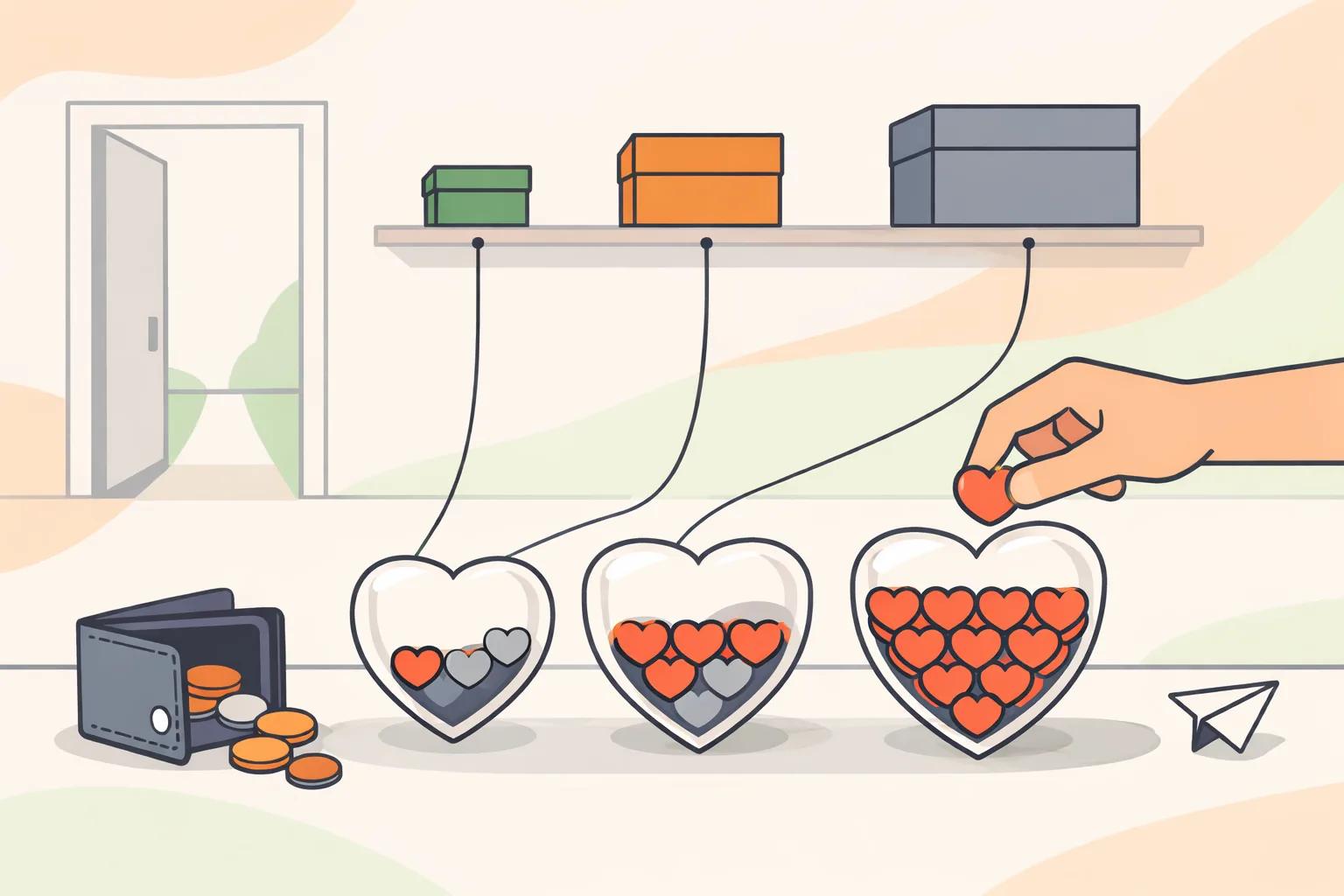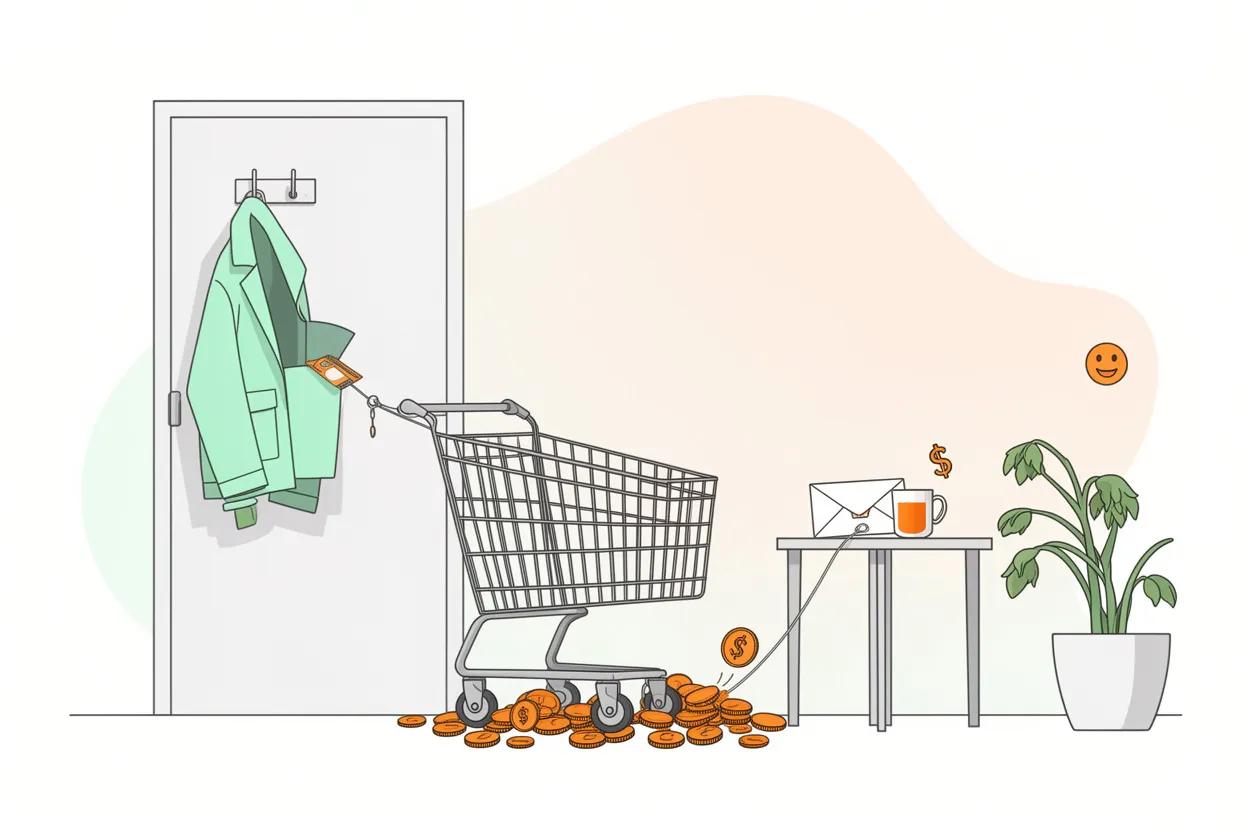

Expense categories often break not because of laziness, but because of constant recategorizing: today "cafes", tomorrow "entertainment", the day after "food". In the end, reports are impossible to compare and decisions are made by feel again.
Short answer: keep 10-15 categories, set rules for gray-area expenses, freeze the structure for 6-8 weeks and review it on schedule, not by mood. This saves time and keeps reports comparable.
Categories should help decisions, not perfect beauty
Categories exist for one reason: to quickly see where you can cut back and where cutting is risky. If a category does not change a decision, it is extra. For some people, "to-go coffee" and "cafes with friends" matter; for others, "eating out" is enough.
A good budget structure looks a little rough but shows reality. It includes essential spending, flexible spending, and a place for unexpected costs.
A simple check: if a category does not change your actions, merge it. If you remember it only when entering a transaction, remove it or turn it into a tag.
Setup algorithm: 6 steps without chaos
- Define the decisions you want to make. Most often these are: where you can cut, how much you need for essentials, and which expenses are better planned in advance.
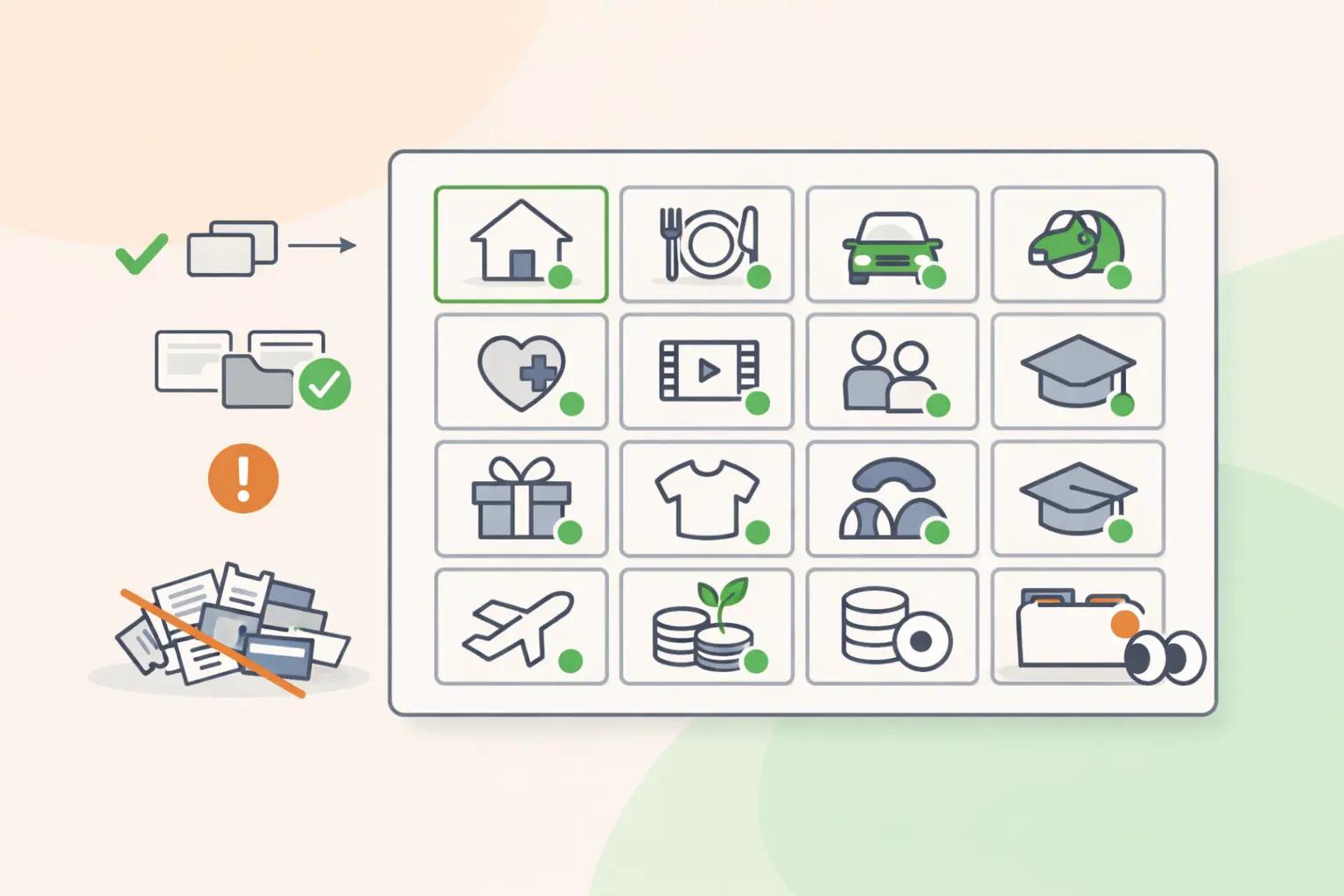
- Build a base skeleton of 6-8 categories. Typical ones are housing, groceries, transport, health, connectivity, debt, and kids (if relevant).
- Add 3-5 flexible categories that match your lifestyle: cafes, subscriptions, clothing, entertainment, hobbies.
- Write rules for gray-area expenses. For example:
- Supermarket food always goes to "groceries", even if it is prepared salads.
- A cafe on a workday goes under "eating out", not "entertainment".
- A taxi home after a doctor visit goes to "health", not "transport".
- Limit detail. If two categories differ only by mood, merge them. For one-off purchases, keep "other" with a 5-7% cap.
- Freeze the structure for 6-8 weeks and set a review date. Improvements happen on schedule, not in the heat of annoyance.
Tip: if you are unsure, pick the category by purpose, not by emotion. The report will then suggest the next decision.
Mini-case. Olivia and Max have income of about $2,012 per month. They tracked 22 categories, kept arguing about where to put food delivery and pharmacy purchases, and spent up to 40 minutes a week on edits. The couple cut the list to 13 categories, introduced the rule "where you buy it is the category", and kept "other" with an about $78 limit. A month later, reports were easier to read, and disputed expenses dropped to a couple of cases per week.
How many categories you need: choose your level of detail
A grid that is too fine makes tracking fragile, while one that is too coarse makes it blind. Choose the level based on spending frequency and the time you are willing to spend on tracking.
| Level | Number of categories | Who it fits | Recategorizing risk |
|---|---|---|---|
| Basic | 10-12 | First months of tracking, busy schedule | Low |
| Medium | 13-18 | Stable budget, regular goals | Medium |
| Detailed | 20+ | You love analytics and are ready for discipline | High |
Psychologists have studied how people choose in complex menus: when items are grouped into clear categories and have short descriptions, choosing is easier and people regret decisions less. You can use this in budgeting too - add 1-2 examples inside each category and do not complicate the list without need.
Unexpected and seasonal expenses: where to put them
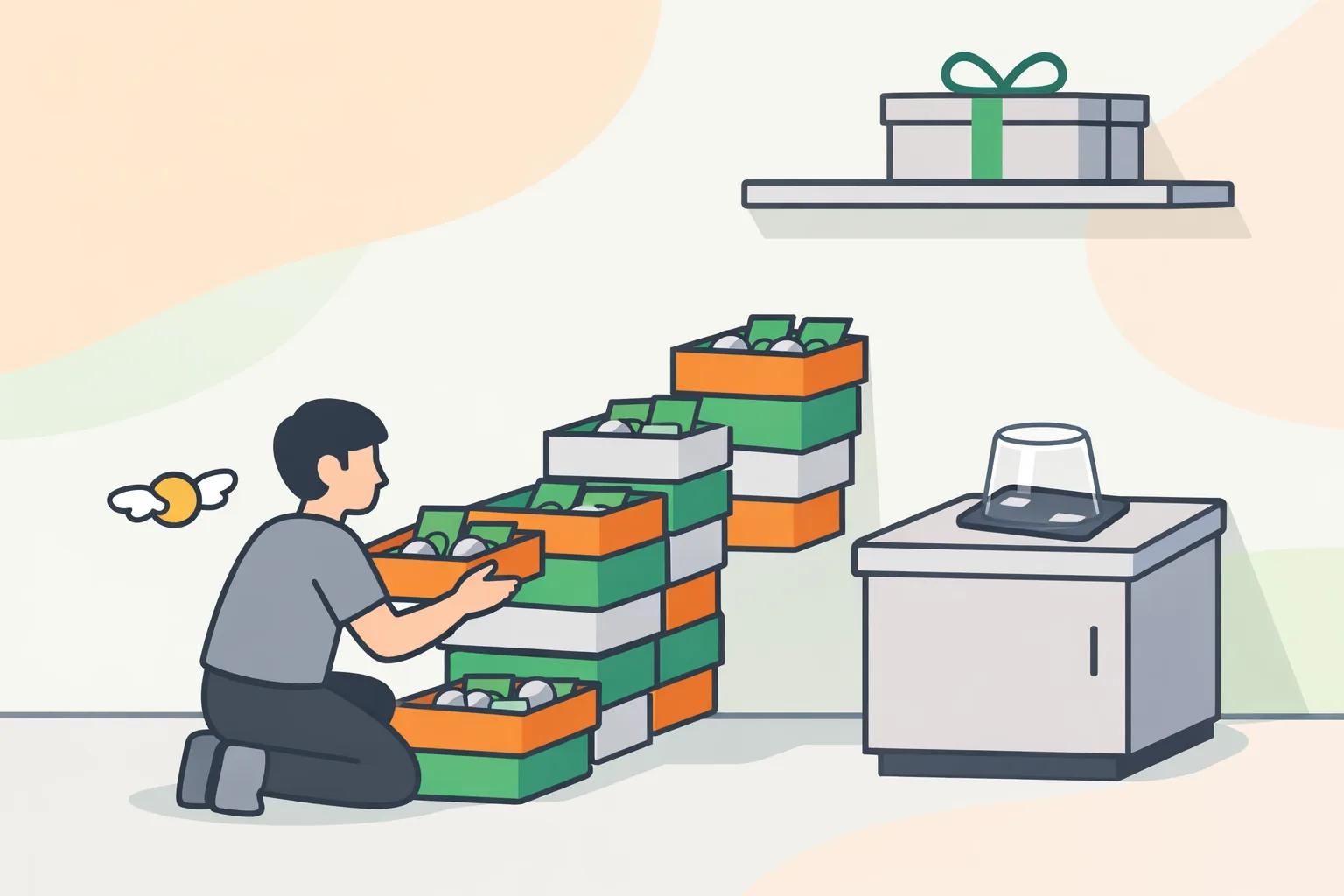
To avoid rebuilding categories every month, create "containers" for nonstandard costs in advance:
- Unexpected expenses - small breakdowns and urgent purchases you did not plan.
- Seasonal expenses - things that happen once a year: insurance, gifts, seasonal clothing.
- One-off big purchases - appliances, furniture, repairs, if you do not keep separate savings.
This keeps the structure stable and prevents moving expenses from "groceries" to "other" every time something unusual happens.
How not to recategorize: stability rules
Before changing categories, ask yourself three questions:
- Does the change affect a decision, or is it just "prettier"?
- Will the new category show up at least 2-3 times a month?
- Is there a rule that will send future expenses there?
If the answer is "no" to even one question, keep the structure as is and use tags or a note instead of a new category.
Another trick is to avoid touching past months. Backdated recategorizing breaks the dynamics and makes comparisons meaningless. It is better to start a new category from the current month and leave the history as is.
When a new category is truly needed
Signals that a category is useful, not just "for beauty":
- The share of spending is consistently noticeable - about 5% or more for a couple of months.
- A repeating purchase shows up every week, not once a quarter.
- The old category has become hard to read: there are too many different goals inside.
- A new obligation appears that needs separate control (for example, a child's class or a garage rent).
If the budget is shared: rules for couples and families
Recategorizing often comes from different habits. Sync in advance and tracking becomes calmer.
- Agree on 2-3 gray-area categories and their rules.
- Separate personal and shared expenses so you do not argue about every coffee.
- Tie rules to the place of purchase or the goal, not to mood.
- Schedule a short review once a month and record decisions.
Note: if the budget is shared, it is better to have one personal category per person and one shared category for flexible spending - it reduces the number of arguments.
Mistakes that break categories
- Too much detail: the report turns into a long list and loses meaning.
- "Other" without a cap: everything awkward leaks there and comparisons break.
- Rewriting history: constant edits of past months erase the dynamics.
- Categories by emotion: today "reward", tomorrow "tiredness" - in reality it is the same thing.
- No rules: every gray-area expense is debated again.
If you want to dig deeper - useful materials
- Getting started without overload: Do you need to track your finances?
- Controlling impulse spending: How to avoid impulsive purchases
- Budget collection: Budget and planning materials
Categories are not a perfect scheme, but a tool for calm decisions. What most often causes doubt in your tracking? Today pick 10-15 categories and write one example expense for each.
Checklist: what to do today and over the next week
Do today:
- List all regular expenses from the last month.
- Choose your level of detail: basic, medium, or detailed.
- Set 2-3 rules for gray-area expenses.
Over the next week:
- Check how many times you changed categories and reduce edits.
- Limit "other" by a specific amount or percentage.
- Set a review date 6-8 weeks from now.
Material is for informational purposes and is not individual financial advice.
FAQ
For a start, 10-15 categories are usually enough: they give control without overloading tracking. If spending is diverse, add categories one by one and lock the rules.
Set a rule in advance: by store type, by goal, or by frequency. That keeps decisions fast and reports comparable month to month, even when the purchase looks ambiguous.
Freeze categories for 6-8 weeks and review them monthly or quarterly. Frequent edits break comparisons, create chaos, and make trends much harder to see.
Yes. It prevents over-detailing but should stay limited and secondary. If 'other' is consistently over 5-7% of spending, the structure needs a tweak or split.