How Much Can You Spend Each Month and Still Feel Financially Stable
A calm spending formula without illusions

Fear of the future rarely comes from one big purchase. It usually grows from small things: the month goes fine, and then you realize again that nothing went to your emergency fund. That is when it feels like you "spend too much," even if income does not look small.
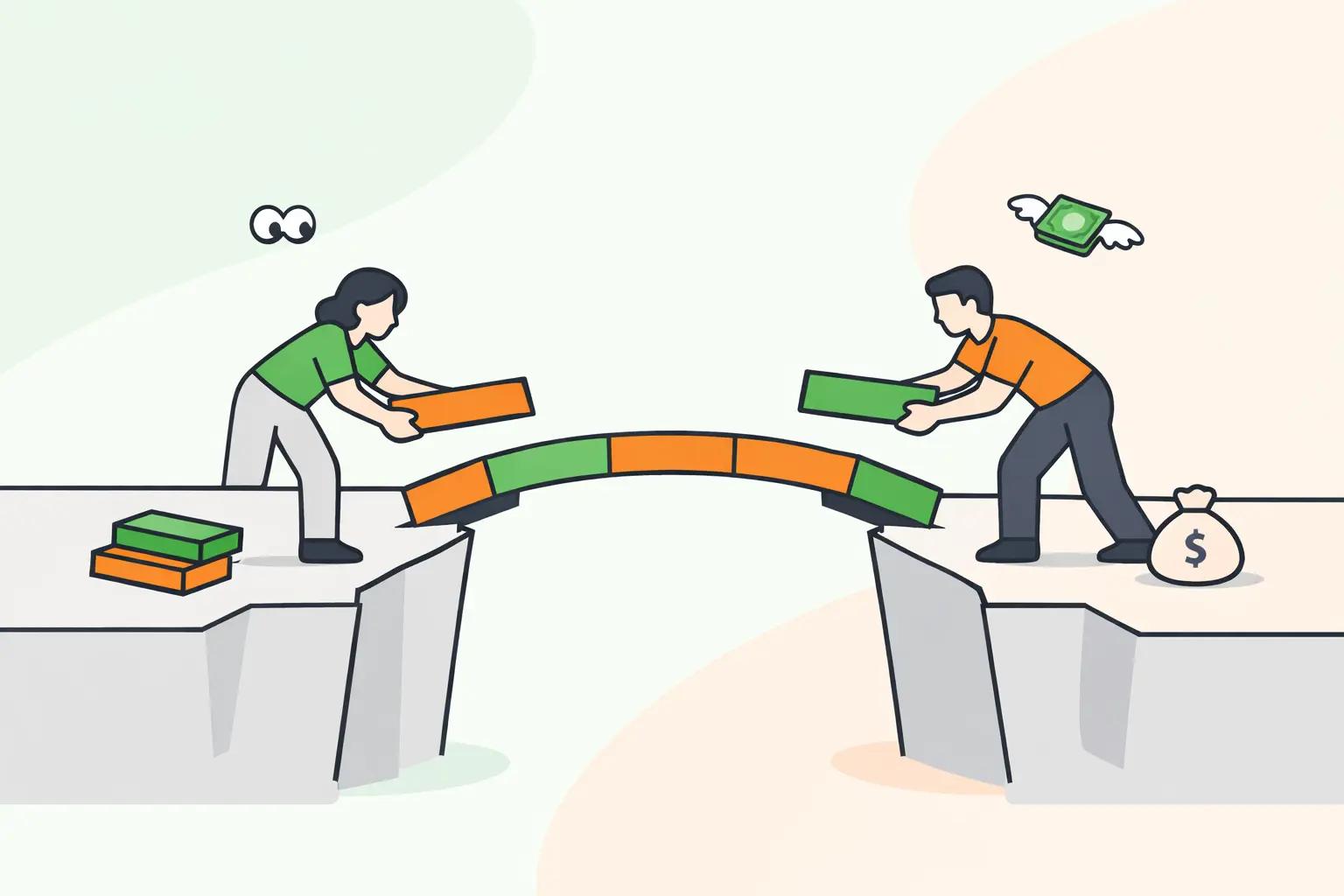
The key is not to chase a universal budget norm, but to build a working frame: cover essentials and the future first, and only then allow flexible spending. That is what creates stability, not perfect percentages in a spreadsheet.

Short answer: how much can you spend per month
You can spend the amount that remains after three blocks: essential expenses, future goals, and a buffer for irregular costs. It sounds boring, but this formula is the only honest answer to "how much can I spend per month."
In a simplified view:
- net monthly income
- minus essential expenses
- minus a future allocation (emergency fund, debt, goals)
- minus a buffer for irregular spending
Whatever is left is your safe limit for flexible spending. It can be 15% or 35% - it depends on your structure and goals, not on a "correct" percentage.
If you want it even shorter, look for a calm boundary, not an ideal share: your flexible spending should let you live normally, and your future sum should grow without constant doubt. These are the two numbers worth knowing by heart.
In the first 1-2 months, allow deviations. This is calibration time: you test whether the limit is realistic and fine-tune the numbers. Two calm adjustments are better than one "perfect" month that you cannot repeat.
Observation: calm appears not when you "save the most," but when you have a clear, repeatable algorithm.
Start with essentials, then the future in your budget
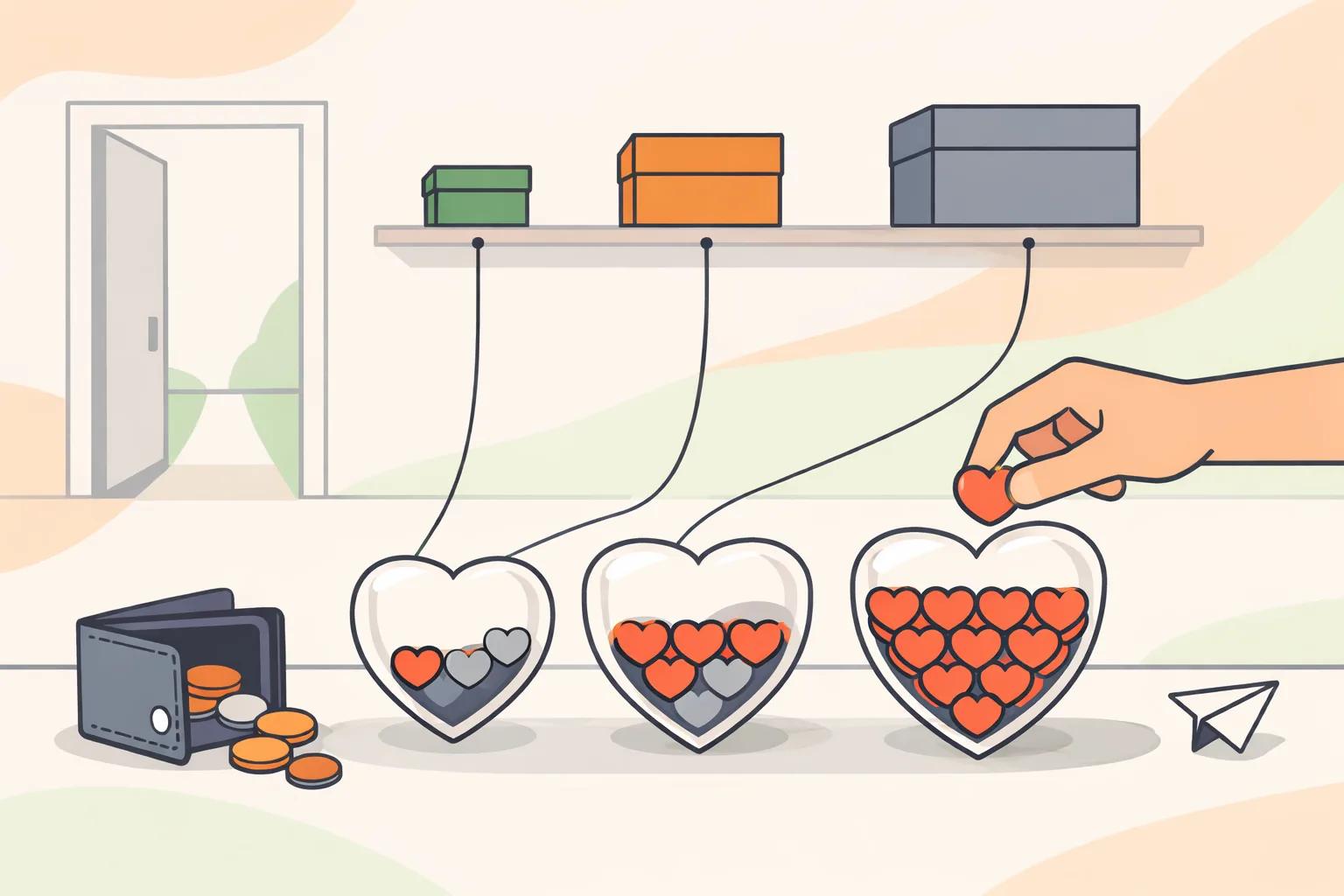
The question "what percent of the budget should go to needs" makes sense only after you split the money flow into three buckets. This is not accounting, it is decision logic.
Essential expenses set the base
These are costs without which the month fails: housing, utilities, basic groceries, commuting, mandatory loan payments, essential healthcare. These are hard to cut quickly without consequences.
There is no pretty percentage here. The fact is simple: if essentials eat almost all income, anxiety stays high even with discipline. That is why you fix the amount first and talk about percentages later.
Count essentials honestly. This is not "the minimum I can tolerate" but the actual sum without which the month collapses. Use a 2-3 month average so you do not fall into the trap of "this month was unusually cheap."
If you want to lower needs, do it separately and gradually. A useful trick is to split costs into "mandatory" and "quasi-mandatory." The second group can be reduced without risk: some subscriptions, habitual delivery, taxis instead of public transport. This shows where the real lever is.
The future: emergency fund, debt, goals
The future is not "someday later." It is a regular payment to yourself so you avoid panic in hard months. This bucket usually includes:
- an emergency fund (at least the first layer worth 1-2 months of essentials);
- faster payoff of expensive debt;
- big goals with a date.
If you do not set this block aside, it turns into "whatever is left," and in reality it often becomes zero. If you want a clear emergency fund formula, keep it separate from everyday spending - the structure is laid out here: Emergency fund: how much you need and how to build it.
If it is hard to choose a future sum, start with a small fixed payment. Let it be a number that does not irritate you and does not break the month, but repeats every time. Rhythm matters more than size: the habit of "future first" builds stability faster than occasional saving spikes.
If you have high-interest debt, it is reasonable to direct part of the "future" into it. A high rate is a negative investment: the faster you reduce it, the more freedom you gain in the next months. The key is not to push essentials below a safe level.
Buffer for irregular expenses
Many costs do not happen every month, but they almost always return: gifts, seasonal clothing, appliance servicing, medical visits, travel. If you do not plan them, they "steal" from flexible spending and create the feeling that your spending and saving percentages keep breaking.
A good approach is to set a small buffer and top it up monthly. It is not a fund and not a goal, it is planned irregularity. Then surprises stop breaking the month.
A simple way to size the buffer is to take last year's irregular costs and divide by 12. For example, if clothing, medical care, and device servicing cost about $470 over the year, about $39 a month already adds stability. The buffer can be small, but regular.
A safe monthly spending formula without anxiety
Once the buckets are named, you can calculate a safe amount for flexible spending. It matters to do it step by step, otherwise percentages become an illusion.
- Take last month's net income (after taxes and deductions).
- Write essential expenses as a monthly amount, not a percent.
- Decide the future sum: emergency fund, debt, goals.
- Add the buffer for irregular expenses.
- The remainder is the amount you can spend without anxiety.
Example. Net income is about $1,542. Essential expenses are $823. Future is $209 ($131 emergency fund + $78 goals). Irregular buffer is $65. Safe flexible spending is: $1,542 - $823 - $209 - $65 = about $445.
That is the answer to "how much should I spend per month." The percentage is about 29%, but what matters is the amount and the repeatable rules, not a pretty number.
If income is variable, calculate from your "minimum month" over the last 6-12 months and keep part of the future in reserve. That lowers the risk that a good month creates false expectations.
One-off income (bonuses, side gigs, refunds) is better kept separate from the regular budget. For calm, decide in advance what share goes to the future and what share to flexible spending. That way surprise money does not break the structure.
Mini-case: a family finds a safe amount
Eli and Maria have a combined income of about $2,143 per month. Essential expenses: mortgage $601, groceries $418, transport $144, kids' costs $189, communications and utilities $111, mandatory payments $65. Total $1,529.
They used to spend "as it goes" and worried the emergency fund never grew. They decided to lock in the future first: $157 to the fund and $78 to goals. Another $52 went to the irregular buffer.
Result: $2,143 - $1,529 - $235 - $52 = about $327 for flexible spending. It was lower than they were used to, but after a month it became clearer where they could spend freely and where they could not. Two months later the fund reached the first layer, and they raised the flexible limit to about $392 without losing control.
Note: a safe amount is not fixed forever. It changes when obligations and goals change.
How to adapt percentages to your reality
The percent of budget for needs and saving is an indicator, not a law. It helps to keep corridors so you know where the risk zone starts.
Below are practical ranges that help you compare your numbers to reality, not force life into a pretty table:
| Situation | Needs | Future | Flexible spending |
|---|---|---|---|
| Stable income, emergency fund already built | 45-55% | 20-30% | 20-30% |
| High rent or mortgage | 55-70% | 15-25% | 10-20% |
| Irregular income | 50-65% | 20-30% (part in reserve) | 10-25% |
| Expensive debt | 50-65% | 20-35% (debt + fund) | 10-20% |
| Family with children | 50-65% | 15-25% | 10-25% |
If needs stay above 65-70%, that is a signal: the safety margin is weak and a "bad" month will be hard. In that case it helps to look for ways to lower fixed costs or temporarily rethink goals.
If you want a starting frame, you can take 50/30/20 and then tune it to your reality. The method is explained here: 50/30/20 Rule: How to Allocate Income by Categories.
Another practical tip is to change percentages no more than once every 1-2 months. If you tweak the split every week, you live in a feeling of "everything is wrong." Give the system time, then adjust based on facts.
When income grows, it is wiser to strengthen the future block first and only then expand flexible spending. That makes stability visible: you feel freer, not just more consumption.
If, on the contrary, flexible spending keeps eating the future, do not start with a strict ban. Cut one category by 10-15% and give it a month. A small change that sticks beats one perfect week.
What breaks stability: common budget mistakes
Even a good plan on paper fails if a few habits leak it. The same holes repeat.
- Mixing essential and flexible expenses. When everything is in one category, limits blur and savings turn into leftovers.
- Ignoring irregular costs. Gifts and seasonal purchases feel one-off, but over time they are a regular line.
- Expecting it to work "by itself." If future goals are not a separate sum, they dissolve in everyday purchases.
- Overestimating willpower. The more decisions you make during the day, the easier it is to spend the limit at night.
- Treating one-off income as "extra life." If you spend every bonus immediately, the percentages break. Decide in advance what goes to the future and what goes to flexible spending.
- Subscriptions and small autopayments. They are invisible until you add them up. A simple rule helps: once a quarter, review all autopayments and cut what you do not use.
A short science note: an experimental study in the Journal of Consumer Research found that paying by card increases unhealthy food purchases compared with cash. This is the "reduced pain of paying" effect - when spending feels less painful, limits break more easily. That is why it helps to make part of flexible spending more "tangible": a separate card with a limit, a pause rule, or stricter categories.
Source: How Credit Card Payments Increase Unhealthy Food Purchases
A weekly ritual that keeps spending in line
Financial stability rests on short check-ins, not perfect percentages. Ten minutes a week is enough to stop drift.
- Compare actual totals across the three buckets.
- See where the overrun is: essentials, flexible spending, or the buffer.
- Make one decision for the week: cut one category, move a purchase, or lower the future contribution.
- Note what worked and repeat for another week.
If you are just starting tracking, do not overcomplicate it: 8-12 categories are enough to see the picture and do not require heroics. Too much detail makes rules fragile, while stability comes from repeatability, not precision down to the dollar.
A good marker that the system works is when you already know your flexible limit and do not get surprised by month-end leftovers. Stability is not perfect frugality, it is predictability and less stress in decisions. When rules are clear, a sense of control appears even without harsh saving, and anxiety goes down. That matters more than any "norms."
If the system requires heroics, it is a bad system. You need a frame you can keep without constant bans.
Once a month, it helps to do a slightly longer review: compare plan and fact, decide where a new limit is needed, and adjust your future sum. This is 20-30 minutes that saves months of doubt.
Where is your most slippery zone right now - essential payments or flexible wants? Today pick one category and set a weekly limit that does not break the month.
Checklist: quick steps for today to feel calmer
- Write down last month's net income.
- Calculate essential expenses as a sum, not a percent.
- Assign a future sum and set a buffer for irregular costs.
- Compute your safe flexible amount and lock the limits in.
- Schedule a short check-in in 7 days.
If you track spending manually, the tool should not get in the way. Kopium helps you log expenses, see categories, and keep your budget frame on one screen - without complex setups or automatic bank imports.
FAQ
It is safer to count a dollar amount, not a percent: housing, food, transport, mandatory payments. If needs stay above 60-65% of net income, look for ways to lower fixed costs or grow income.
Base your plan on your lowest month over the last 6-12 months and keep a reserve inside goals worth at least 1-2 months of essential expenses. In better months, catch up.
No. First set aside a sum for the future: emergency fund, debt, or goals. Without that, the leftover goes to current wants and stability never appears.
Create a separate buffer for irregular costs and top it up monthly with small contributions. That way big purchases do not break your everyday spending limit.