50/30/20 Rule: How to Allocate Income by Categories and Keep Budget on Track
50/30/20 rule without chaos.

Budgets often fall apart not because of big purchases, but because of small daily choices. Without clear boundaries, spending quietly eats the leftover.
The 50/30/20 rule gives a simple frame: you split net income into three buckets and check that the shares do not drift. It is a handy 50/30/20 budgeting method when you want control without heavy spreadsheets. In search it often appears as the "50 30 20 rule" or the "50/30/20 method" - the idea is the same: percentages create guardrails.
The core of the 50/30/20 rule is to allocate income first and spend after. The mini plan looks like this:
- Calculate net income for the month after taxes and deductions.
- Send 50% to basic needs.
- Reserve 30% for wants and flexible spending.
- Set aside 20% for goals: emergency fund, debt, savings.
- Check actual spending against limits once a week.
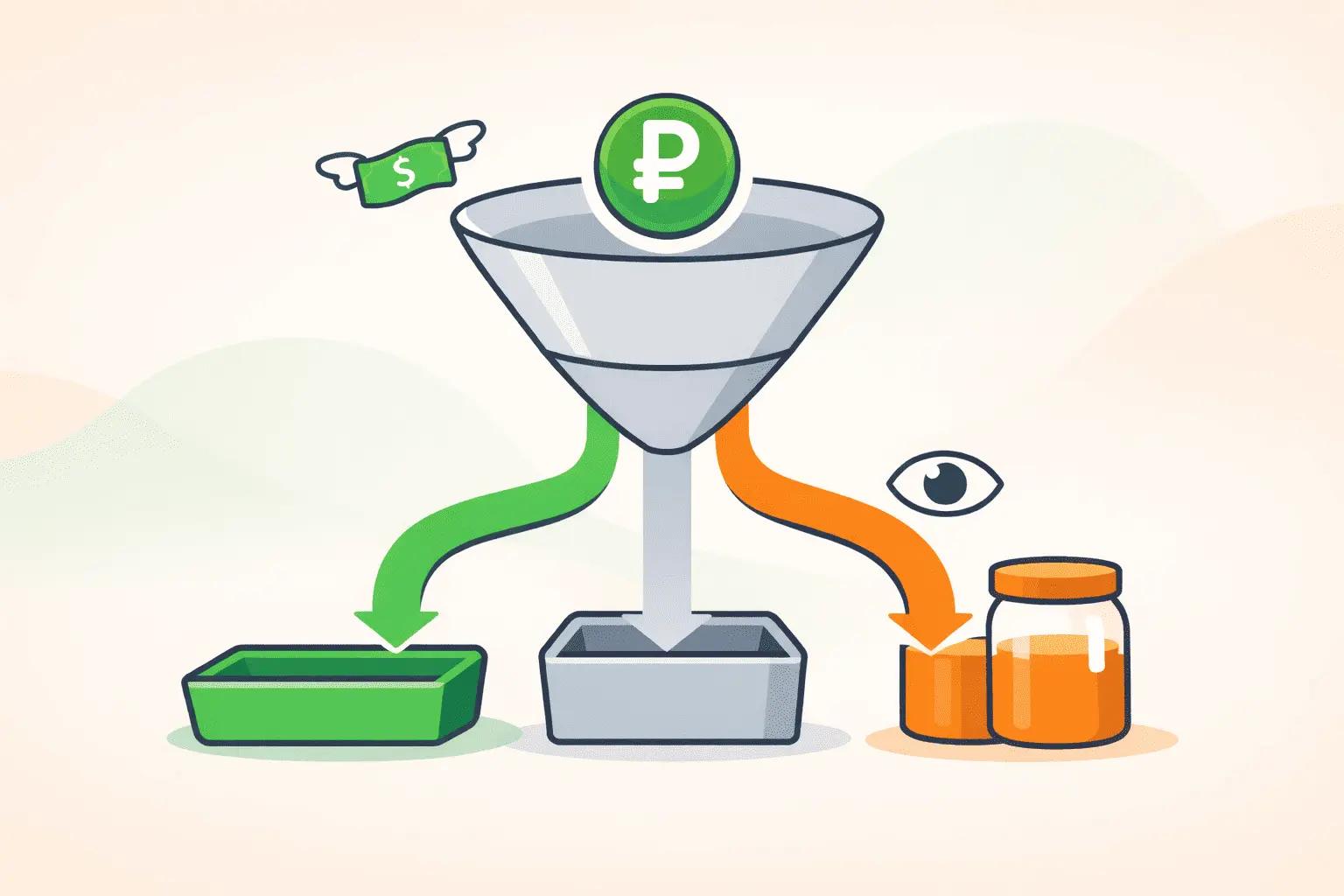
Needs, wants, goals: sort spending without arguments
The three shares are not about perfect labels. They are about faster decisions. Any purchase should land in a clear bucket without debate.
- Needs: costs that make the month workable - housing, utilities, groceries, commuting, essential healthcare, mandatory payments.
- Wants: comfort and enjoyment - cafes, entertainment, subscriptions, clothing beyond necessity.
- Goals: future and security - emergency fund, extra debt payments, saving for big purchases.
Do you need 30 categories? No. For a start, 8-12 is enough - otherwise tracking turns into a hobby.
For ambiguous purchases, use one rule: can you delay it for a month without harm? If yes, it is a want. If no, it is a need. Categories are half the battle. Here is how to set them without 30 items: Expense categories: how to set them up and avoid constant recoding.
Tip: keep the needs list short and stable. Fewer gray zones means calmer tracking.
Quick math with real numbers: how to allocate income 50 30 20
When you need to see how to allocate income 50 30 20, take your actual net income from last month and split it into three shares. For example, about $1,797 gives these limits:
50% = $898 30% = $539 20% = $359
Mini case. Erin and Paul bring home about $1,797. Mid-month they bought kids' boots and forgot to log a $9 delivery fee. At the weekly check they saw wants already above 30% and moved a restaurant night to next week. This is how 50/30/20 budget allocation keeps small chaos from turning into a month-long drift.
Once you see the split, assign limits to your needs and wants categories and stick to them for the rest of the month.
Where the rule needs tweaks so it works for you
It is easy to feel the 50/30/20 method does not fit when income is irregular or fixed costs are high. The rule is flexible - you can shift the shares and keep the three-bucket logic.
| Situation | How to shift shares | What to control |
|---|---|---|
| High rent or mortgage | Increase needs by 5-15 points | Fixed payments and their growth |
| Irregular income | Calculate from your lowest month | A 1-2 month buffer inside goals |
| High-interest debt | Increase goals and reduce wants | Faster payoff without cutting needs too far |
| No emergency fund yet | Strengthen goals for a few months | Building a basic reserve quickly |
When you are building a reserve, it helps to estimate target size and timing (a detailed guide is here: Emergency fund: how much you need and how to build it). After things stabilize, move the shares closer to 50/30/20.
Fewer decisions, fewer slip-ups: a bit of spending psychology
There is a known effect called decision fatigue: the more choices you make during the day, the harder it is to hold boundaries in the evening. The 50/30/20 rule cuts the number of choices because each dollar already has a bucket and a limit.
To make it work, check the wants limit before paying, not after. For readers who often struggle with impulse buys, this practical guide helps: How to avoid impulse purchases.
Note: a clear wants limit reduces guilt and makes spending deliberate instead of hiding purchases inside needs.
Low-stress control: a 10-minute weekly ritual
The 50/30/20 method survives on short check-ins, not on perfect discipline. Ten minutes a week is enough to see where the shares are drifting and what to adjust.
- Compare totals across the three buckets.
- Shift any overage from wants into goals if you see a gap.
- Adjust weekly limits so the last days of the month are not a scramble.
Which share goes to needs for you right now - closer to 50% or clearly higher? Today, take last month's total and split it into three buckets to see your real picture.
Checklist: do today
- Write down last month's net income.
- Split it into 50/30/20 and set limits for the three buckets.
- Identify which costs push needs above 50%.
- Pick one action that restores balance next week.
FAQ
Yes, but base the split on your lowest month and keep a 1-2 month buffer inside goals. Then bad months don't break the plan, and good months catch you up.
Needs are costs you can't skip for a workable month: housing, utilities, basic groceries, commuting, mandatory payments, and essential medicine or care.
Shift the shares toward needs by 5-15 points and trim wants temporarily. At the same time, look for ways to lower fixed costs so you can return to balance.
If debt has a high rate, direct part of the goals share to faster payoff and keep savings minimal. The key is not to push needs below a safe level for basic living.