Where Does the Money Go: How to Start Tracking Expenses and Stick With It
A simple start to expense tracking

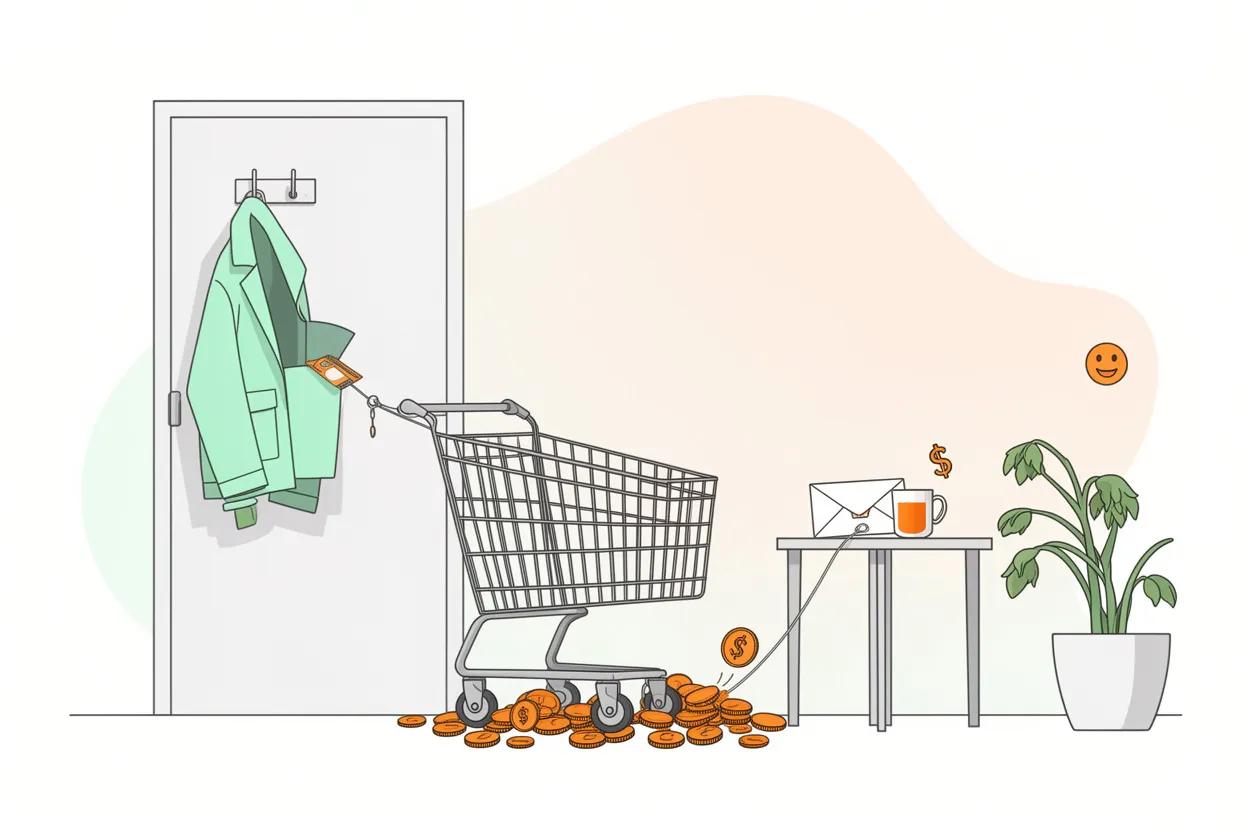
End of the month. Your card balance is noticeably lower than expected. Your salary was fine, no big purchases, yet you still don’t understand where the money went.
This isn’t an income problem. It’s a visibility problem.
Without tracking, finances live in an "approximate" mode: roughly spent on food, roughly on transport, roughly left. It’s the "roughly" that creates anxiety. Not the amount, but the uncertainty.
To fix this, you don’t need a perfect system or an hour a day. You need one working method to record expenses and a habit to repeat it.
Why Money "Disappears" Even With a Good Income
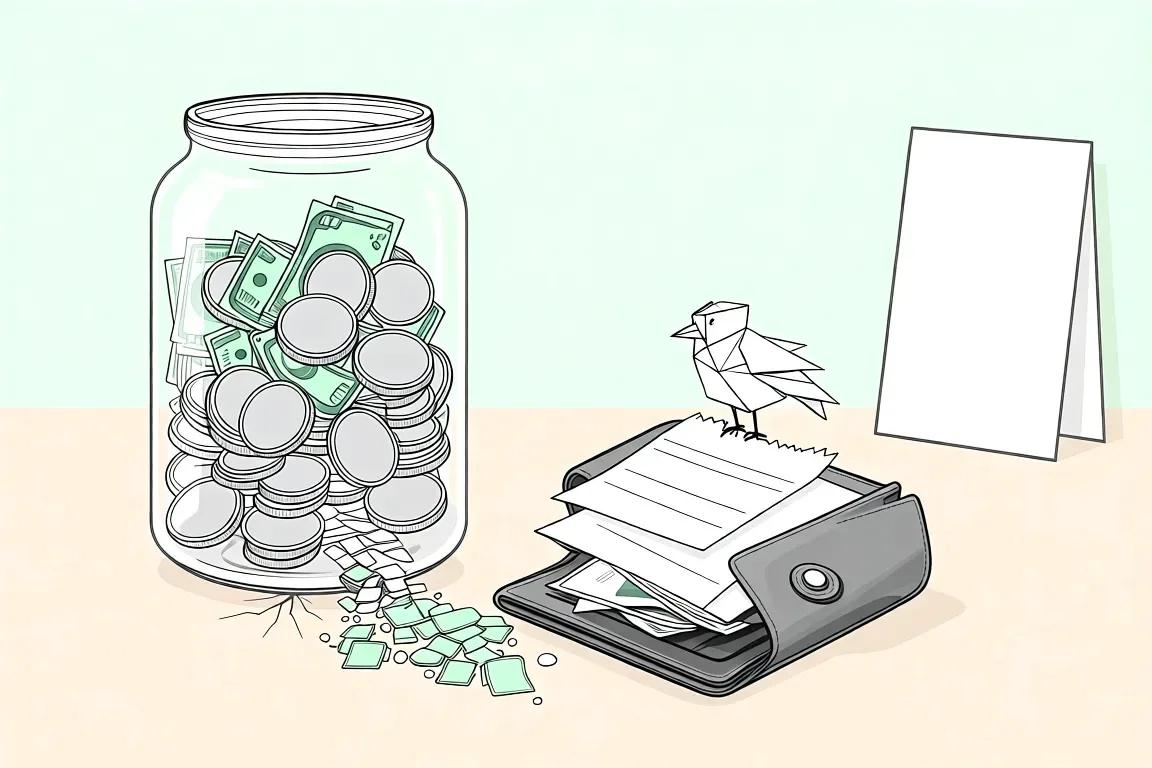
Usually, it’s not the budget that breaks, but attention. There are several common mechanisms.
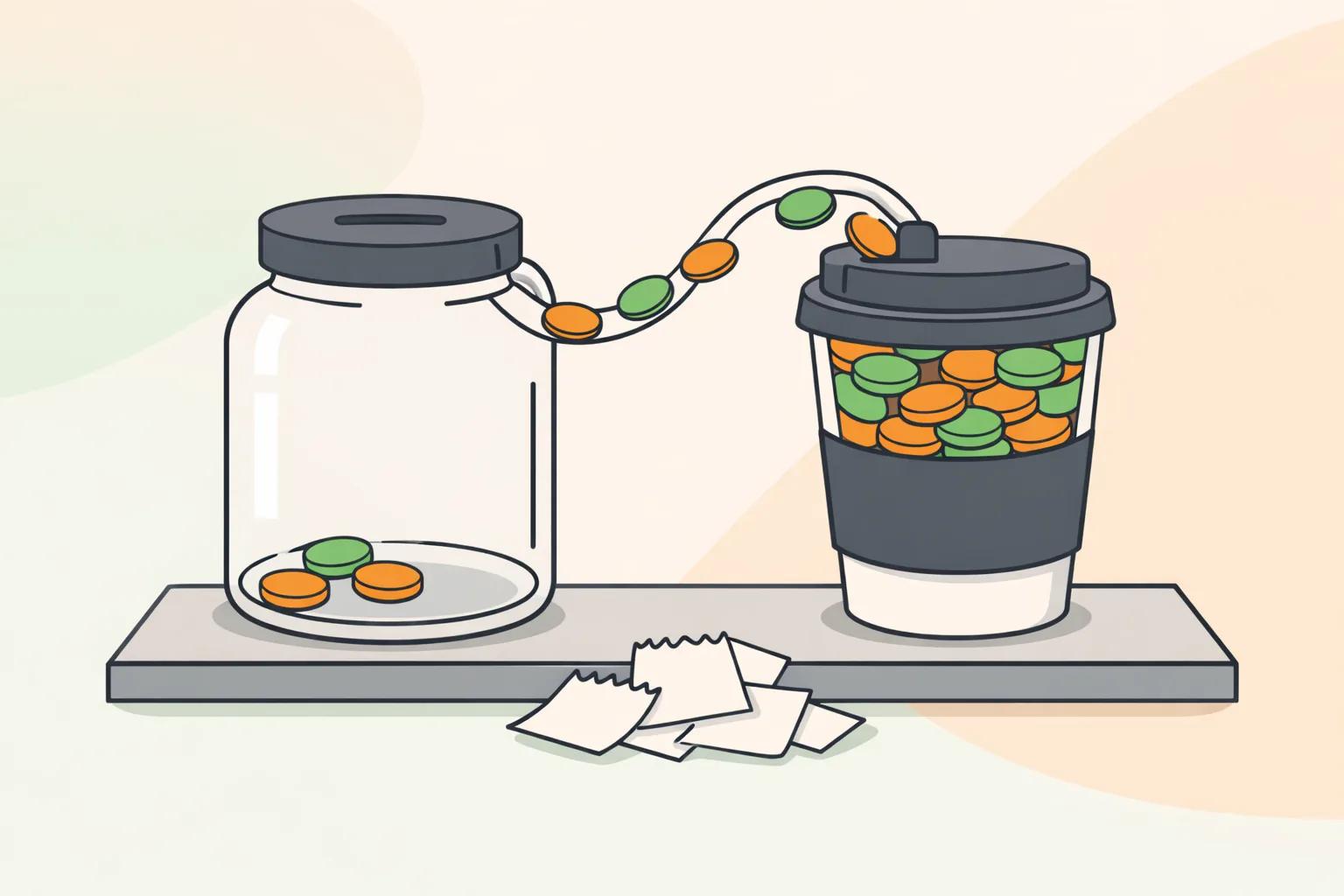
Small expenses go unnoticed. Coffee on the way, delivery, snacks, a 299-ruble subscription — each seems insignificant. But 8–12 such "small things" per week easily add up to 4,000–7,000 rubles a month, which you don’t see as a separate expense.
Card payments soften the pain of spending. Paying by card or phone feels less painful to the brain than paying cash. Money doesn’t "leave your hands," so purchase decisions are easier, and control is weaker.
Categories get mixed up. A supermarket trip turns into groceries + household chemicals + a set of glasses "since they’re on sale." One receipt covers three different categories, but in your mind, it’s all recorded as "food."
No reference point. Without records, you can’t compare this month to the last. You don’t know if things got better or worse, where overspending happened, or where everything is fine. There’s only a feeling of "expensive."
Note: Tracking doesn’t automatically change habits. It makes them visible. And what’s visible can be changed.
How to Start: Four Steps Without Heroics
If a system demands perfect discipline from day one, it’s a bad system. A working method withstands fatigue and busy days.
Step 1. Record Your Starting Point
Before optimizing anything, it’s useful to understand where you’re starting from. Open your main card statement for the last 30 days and roughly sort expenses into blocks: food, transport, housing, children (if any), entertainment, others.
Exact amounts aren’t important now. What matters is the order of magnitude:
- Is food 20% of income or 40%?
- Entertainment and cafes — closer to 3,000 or 13,000?
- Is "others" a small tail or the second-largest category?
This takes 15–20 minutes. But after that, you’ll rely not on "I think," but on real numbers.
Step 2. Choose a Minimally Viable Format
Notebook, spreadsheet, app — it doesn’t matter. The criterion is one: you can enter an expense in 30 seconds at any moment while you still remember it.
If tracking only happens in the format "I’ll sit down and record everything in the evening," it quickly falls apart. In the evening, you no longer remember exactly what you bought at lunch or how much the snack from the vending machine cost.
The minimal data for each entry:
- amount;
- category;
- date (usually automatic).
Comments, tags, locations, and other details can be added later, once the habit is established.
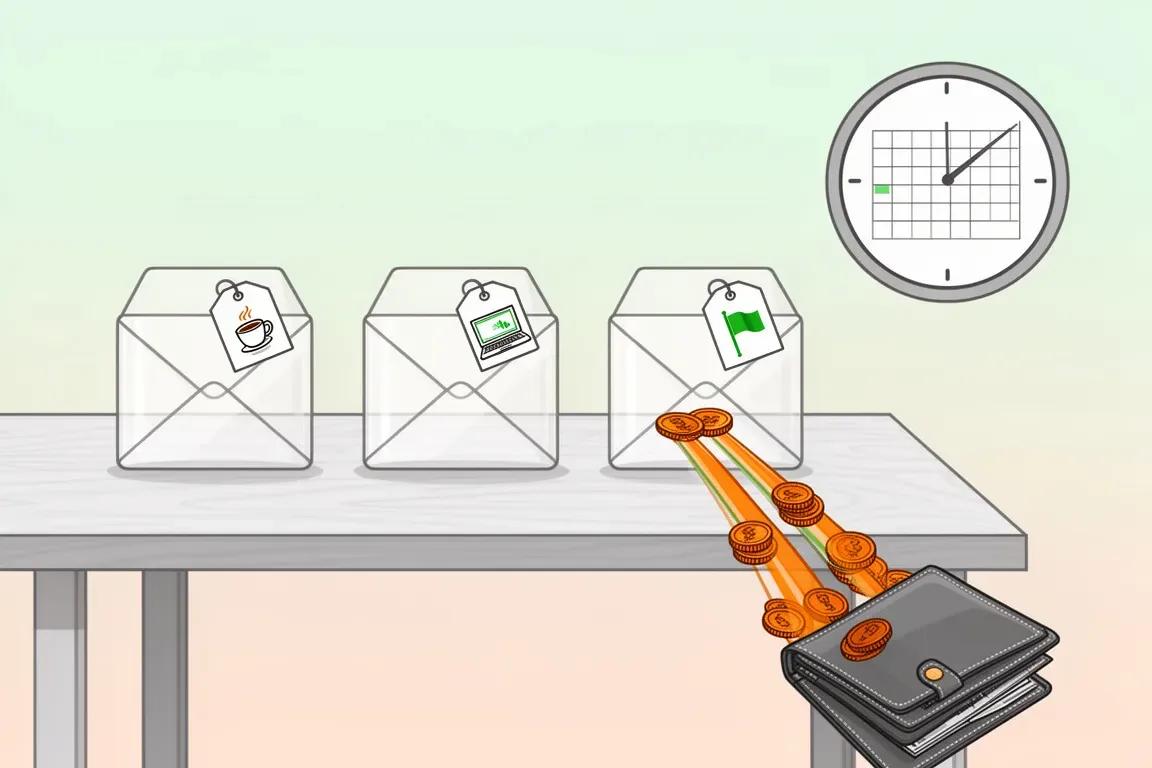
Step 3. Define 5–7 Categories, No More
An overly detailed system breaks down fastest. When you spend half a minute not entering the amount but choosing from 23 categories, you want to quit.
A starter set that works for most families:
- Food and groceries (including snacks and delivery);
- Transport;
- Housing (rent, utilities, mortgage);
- Health;
- Children (if relevant) or "Family";
- Entertainment and cafes;
- Others.
Categories can be refined later. For example, if "Others" consistently grows, you can split it into "clothing," "marketplaces," or "gifts."
Starting rule: better 6 working categories than 20 that make you abandon tracking within a week.
Step 4. Establish One Ritual
Tracking relies not on willpower but on linking to an existing habit. Suitable options:
- immediately after payment: get the receipt — enter the expense while the phone is still in your hand;
- daily mini-ritual: 3–5 minutes in the evening or morning when you’re already looking at your phone;
- weekly review: 10–15 minutes once a week to reconcile and summarize.
Choose one main ritual. Others can be added later when it gets easier.
Expense Analysis: One Week Case Study
Alexey, 34, works full-time, lives in a big city, has a stable income. No loans or debts. But by the end of the month, his card balance regularly falls short of expectations.
To avoid postponing to "Monday," he started small: reconstructed expenses for one typical week from his statement — some had to be guessed by store names.
| Day | Expense | Amount |
|---|---|---|
| Mon | Groceries, "Pyaterochka" | 2,140 ₽ |
| Mon | Coffee near metro | 220 ₽ |
| Tue | Lunch at work | 480 ₽ |
| Tue | Taxi home (was late) | 650 ₽ |
| Wed | Pharmacy | 870 ₽ |
| Thu | Lunch + coffee | 610 ₽ |
| Thu | Marketplace (sale item) | 1,890 ₽ |
| Fri | Groceries + household chemicals | 3,450 ₽ |
| Sat | Cafe with friends | 2,300 ₽ |
| Sun | Subscriptions (auto-charged) | 847 ₽ |
Total for the week: 13,457 rubles.
In Alexey’s mind, it was "around 9–10 thousand." The difference — 4,457 rubles — he didn’t perceive as separate expenses.
What surfaced during the analysis:
- marketplace "sale" — an unplanned purchase, he just "browsed";
- subscriptions — three services, one of which he hadn’t opened for months;
- taxi — a "one-time thing" that actually happens about three times a week.
Alexey didn’t cut all expenses sharply. He made two decisions:
- canceled the unused subscription (318 rubles/month);
- agreed with himself that "sale" marketplace items stay in the cart overnight: if the next morning the item still seems necessary — buy it; if not — delete it.
A month later, he repeated the weekly analysis and saw the gap between expected and actual expenses shrink by about half. Not because he became "stricter," but because he had simple tracking and a few conscious limits.
Thought: Tracking isn’t about total saving. It’s a way to eliminate surprises at month-end.
Three Mistakes That Kill Tracking at the Start
1. Too complex a system from day one. Categories, subcategories, tags, locations, contacts, comments — all at once. After a week, it’s no longer a tool but extra work. At some point, you just "forget" to open the app.
Better to start minimal and add details only when they’re really needed for analysis.
2. Perfectionism as a reason to quit. "Missed three days, now the data is ruined, no point." This is a trap. Incomplete tracking still gives more clarity than none.
Missed days — continue from today. You can mark that period as "approximate" and not dramatize.
3. Tracking without reviewing results. Recording expenses without looking at monthly or at least weekly totals is like weighing yourself but not looking at the scale. Minimal benefit.
Make a simple rule: once a week, spend 10 minutes on three questions:
- how much did I spend in total;
- which category unexpectedly grew large;
- what am I ready to change next week.
This is when tracking turns from a "log of events" into a decision-making tool.
What Changes When Tracking Becomes a Habit
After 4–6 weeks of regular tracking, several noticeable shifts usually occur.
The feeling of "money disappearing" disappears. Not because you have more money, but because you see exactly where it goes. This clarity alone reduces anxiety.
A basis for decisions appears. Want to cut expenses — you see where there’s room and where it’s already tight. Want to plan a vacation or big purchase — you understand your real monthly free balance.
Money talks become calmer. In the family, instead of "you spent again," it becomes "look, over three months we spent this much on delivery, let’s decide if we’re okay with that." It’s a different level of conflict and agreement.
Planning becomes easier. Even a rough budget ("about this much for food, that much for housing, this much for everything else") is based not on feelings but on data from past months.
Important: The first couple of weeks, tracking almost always feels unnecessary and inconvenient. That’s normal. Your goal at this stage is not to be perfect but simply not to quit.
Take Action Today
- Open your card (or main accounts) statement for the last 30 days.
- Break expenses into 5–6 major categories — without trying to detail everything.
- Find at least one expense that surprised you by its amount.
- Choose a tracking format: app, spreadsheet, or notebook — the one you can realistically use daily.
- Link tracking to one ritual: immediately after payment or a specific time of day.
- Record your first expense today — as soon as it happens, don’t postpone.
Tracking doesn’t build in one evening. But the feeling of control starts returning from the first week when expenses stop being "approximate."