7 Signs of Financial Chaos: How to Tell When Your Money Is Out of Control
Money disappears — but you don’t know where

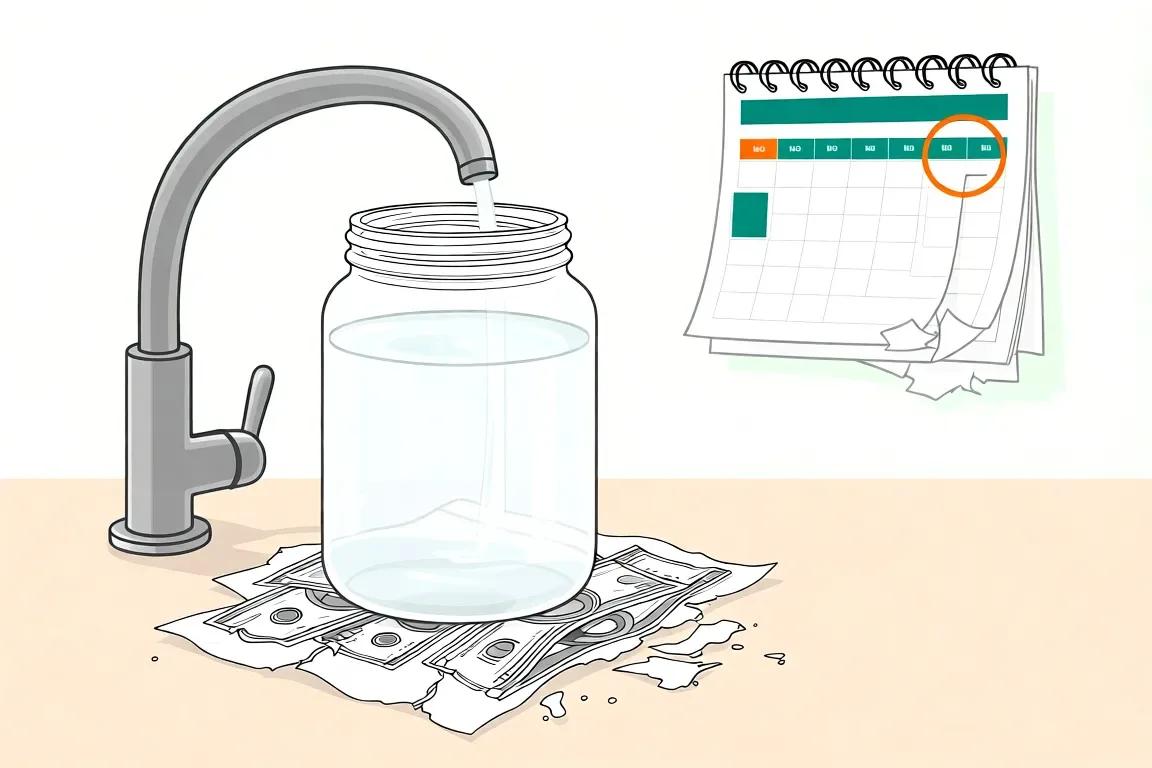
Payday arrives on Friday. By Sunday, there’s a dinner delivery, a couple of marketplace orders, gas, groceries "for the week." By Monday, you already feel a slight anxiety: the money seems to be there, but somehow it’s gone. By the end of the month — zero again, and still no idea why.
This isn’t about irresponsibility. It’s about lack of visibility. Money doesn’t disappear — it just moves without your involvement. The result is classic financial chaos: money lives its own life, and you just adapt.
Below are seven signs that this is exactly what’s happening. For each sign: why it happens and what you can do in the next 10 minutes, without heroics or complicated spreadsheets.

Sign 1: You can’t name your top three expense categories
Try it now: what do you spend the most money on each month? Food, rent, transport — okay. What’s fourth? Fifth? How much in rubles do you spend on each?
If your answer is vague, it’s not because you’re inattentive. It’s just that your expenses have never been gathered in one place. Your brain remembers big payments, and everything else fades into the background.
Why this happens. Expenses are scattered across cards, cash, transfers to friends, and subscriptions. Insurance debited somewhere, a "one-time" gadget purchase somewhere else, gifts here and there. Each individual expense seems small and reasonable. Together, they add up to a sum that’s hard to guess at a glance. As a result, you don’t see your real expenses by category and don’t understand where your money goes.
What to do in 10 minutes. Open your transaction history in your banking app for the last 30 days. Don’t analyze or judge yourself — just scroll through and mentally group expenses into 4–5 categories: food, housing and utilities, transport, shopping and entertainment, other. This simple overview already gives you a clearer picture: you see where money really concentrates and where you just assumed it did.
If you want to reinforce this feeling, start simple tracking right away: in notes, a spreadsheet, or an app like Kopium — it’s convenient to tag categories and see your expense structure immediately.
Sign 2: Money "just runs out" without a clear reason
"I didn’t buy anything special, but there’s no money left." Sound familiar? Money disappears unnoticed, and every time it feels like you barely bought anything extra this month.
This is a classic symptom of invisible expenses. They’re not large — so they don’t stick in your memory. But they often explain why money runs out by mid-month.
Why this happens. The brain poorly sums up small expenses. Real-life examples:
- coffee on the way to work for 280 ₽ almost every day — about 5,600–8,400 ₽ per month;
- delivery twice a week at 600–750 ₽ — another 5,000–6,000 ₽;
- "penny" subscriptions for music, movies, cloud storage, workout services — easily 1,500–3,000 ₽;
- regular snacks at gas stations, office store treats — a few thousand more.
In your mind, these remain isolated episodes. Together, they form a noticeable chunk of your budget that you don’t even count as an expense — it seems to happen "on its own."
What to do in 10 minutes. Find all transactions under 1,000 ₽ in your history over the last 30 days. Don’t try to categorize perfectly — just note how many such expenses there are and their total sum. Often, this is where the answer to "why money runs out" is buried.
Note: Invisible expenses aren’t enemies. The problem isn’t that you drink coffee or occasionally order food. The problem is not knowing how much it costs monthly and what portion of your budget it consumes.
Sign 3: You feel anxious before payday, even with stable income
Three or four days before payday, a familiar feeling appears: "I won’t spend extra, just in case." This isn’t frugality — it’s an attempt to gain some control in the fog.
Formally, everything is fine: salary arrives on time, amounts are fairly predictable. But every month you wait for the next transfer with the same tension, as if the last one was the final.
Why this happens. Without expense tracking and at least a rough monthly budget, you can’t know how much is really left and if it will be enough. The brain reacts to uncertainty with anxiety — a normal protective response, not weakness. It’s like saying, "I don’t understand what’s going on, better be cautious."
If you add a few times when you went negative or borrowed at month-end, the anxiety becomes entrenched. It’s not about math, but about feeling out of control.
What to do in 10 minutes. Write down one number: how much money you currently have across all accounts and cards, including cash. On paper or a note. Don’t make a plan or estimate "how much you need" — just the fact. Sometimes the real number, even if disappointing, is easier than anxious uncertainty. This is the first step to stop living paycheck to paycheck.
Sign 4: Purchases happen "by themselves"
You went in for bread — came out with three bags. Opened a marketplace "just to check prices" — ended up ordering for 4,380 ₽. Took a taxi "just today, because I’m tired," and that’s the third time this week. Not planned, but somehow it happened.
Impulsive purchases aren’t a character flaw. They’re a lack of orientation and clear boundaries.
Why this happens. Without knowing how much you’ve already spent in a category, your brain doesn’t get a "stop" signal. There’s no reference point like: "I’ve already spent 7,000 ₽ on cafes out of the planned 8,000 ₽ — maybe cook at home today." Each purchase is evaluated in isolation: "It’s cheap, only 600 ₽." But monthly, it adds up to 6,000–10,000 ₽ that weren’t planned.
Plus, marketplaces and online stores are designed to make buying easy and fast. Without category limits, this almost always leads to overspending.
What to do in 10 minutes. Pick one category where purchases happen "on their own": marketplaces, eating out, taxis — whatever causes you the most doubt. Calculate how much you spent there in the last 4 weeks. Just the number, no judgment or guilt. This already gives you a sense of scale.
If you notice impulsive purchases take a significant part of your budget, you can explore this topic deeper in the article on how to avoid impulsive purchases.
Sign 5: Financial goals exist "in your head" but don’t progress
"I want to save for a vacation / emergency fund / new laptop" — and this desire has lived for months or years without moving closer. Meanwhile, the feeling that money keeps disappearing hasn’t gone away.
Why this happens. As long as a goal lives as "I should someday," the brain doesn’t treat it as a task. Without a specific amount and deadline, the goal remains a wish. Without at least minimal expense tracking, it’s unclear how much you can realistically save without pain. So with every "extra" payment like delivery or clothes, you evaluate the moment, not the impact on the goal.
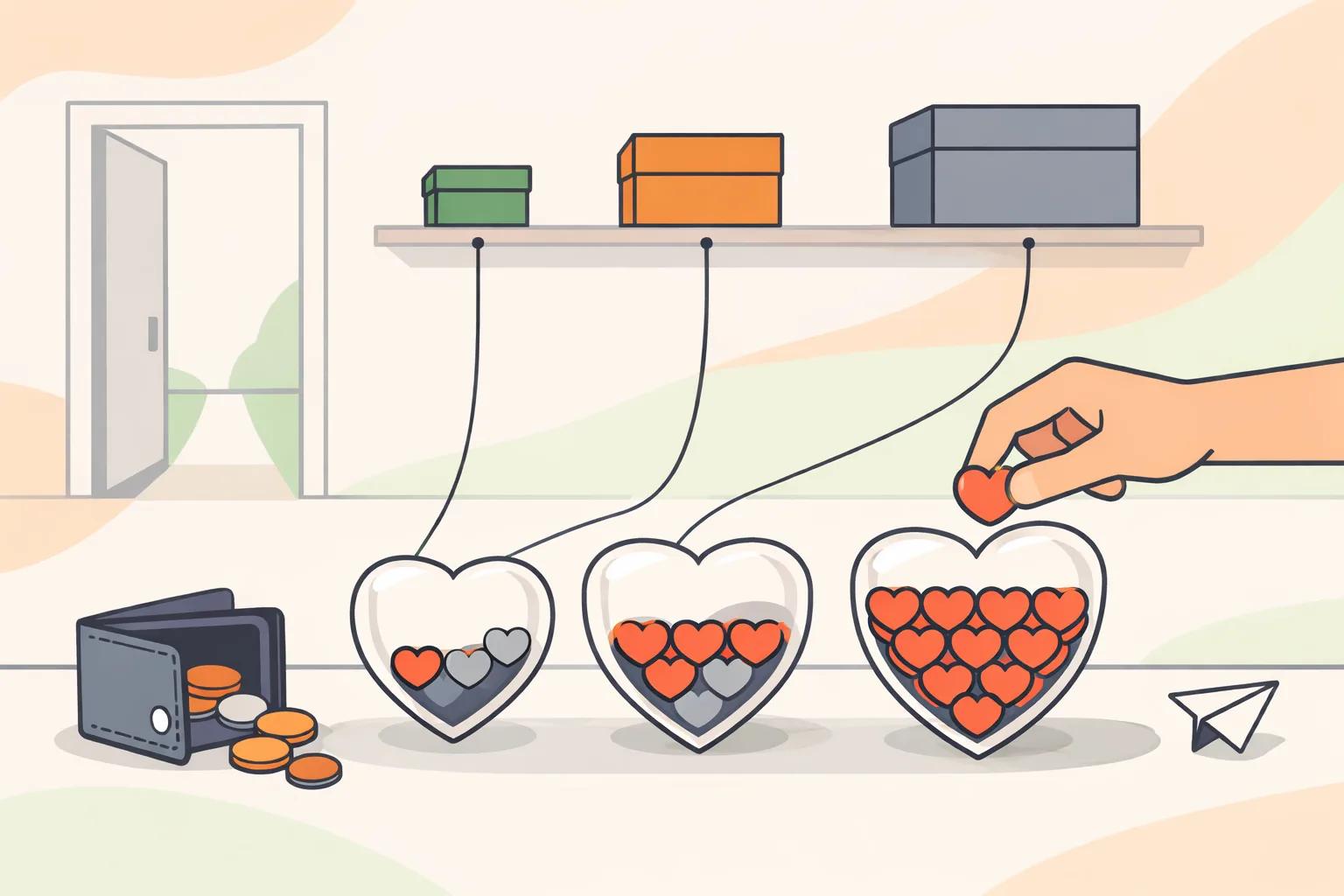
Another reason is the lack of a separate place for the goal. If all money is on one card, it’s psychologically considered "free." Any goal drowns in everyday expenses.
What to do in 10 minutes. Write down one goal with an amount and approximate deadline. Not "save for vacation," but "50,000 ₽ by May" or "20,000 ₽ in three months for emergency fund." One specific goal is better than five vague wishes.
You can immediately estimate the minimum step: how much per month or week. For example, 50,000 ₽ by May in 5 months is about 10,000 ₽ per month or just over 300 ₽ per day. This math doesn’t have to be perfect; it’s to make the goal less abstract.
Important: The goal doesn’t have to be "right" by anyone else’s standards. The main thing is that it’s yours and specific. Then you get a reference point to calculate and make decisions.
Sign 6: You don’t know how much you spend on food
Food is usually the least transparent expense category. It includes groceries, cafes, delivery, work lunches, snacks, coffee on the way, "grabbed something for a movie." All in different amounts, places, and times.
Why this happens. Food involves dozens or sometimes hundreds of small transactions per month. They’re scattered across different categories in banking apps: "cafes and restaurants," "groceries," "other." Plus cash purchases if you sometimes pay in cash. They almost never automatically add up to a single "food" line. As a result, you’re sure you spend, say, 15,000 ₽, but in reality it’s 25,000 ₽ — which easily explains why money runs out.
What to do in 10 minutes. Find all food-related transactions in the last 30 days: supermarkets, cafes, delivery, fast food, coffee shops. If you pay cash, estimate from memory. Add them up. Then honestly ask yourself: what amount would you have guessed before? The gap between expected and actual is your growth point.
Next, you can take a simple step: allocate a separate monthly "food basket" and check at least weekly how you’re tracking against it. In Kopium, food is easy to track as a separate category and see how close you are to your limit.
Sign 7: You avoid looking at your finances
You swipe away a debit notification without reading. Haven’t opened your statement for a month. Talking about money causes slight tension and a desire to "switch to something pleasant." Formally, you know this is worse, but you postpone reviewing finances for "later."
This isn’t laziness or immaturity. It’s a protective reaction to anxiety.
Why this happens. When finances are associated with unpleasant discoveries ("overspending again," "can’t close the month again"), the brain starts avoiding them to escape discomfort. The longer the avoidance, the more chaos accumulates and the scarier it is to look. A vicious circle: the worse the financial chaos, the stronger the resistance.
This is especially noticeable if you’ve had painful situations with debts, fines, or late payments in the past. The brain simply remembers: "money = stress."
What to do in 10 minutes. Open your transaction history and just look at the last 7–10 days. Don’t analyze, plan, or look for "where you went wrong" — just facts. You can even set a 5-minute timer: "I’ll look and close it in 5 minutes." The first honest look is the hardest. After it, it often feels not heavier but calmer: you stop imagining worst-case scenarios.
Thought: Financial anxiety is almost always about the unknown, not the actual numbers. When numbers are visible, even if unpleasant, anxiety decreases. You get the feeling: "At least now I understand what’s going on."
Mini-case: 90,000 ₽ and zero by month-end
Anton earns 90,000 ₽ a month. Lives alone, rents a one-room apartment near the metro, rent plus utilities — 28,000 ₽ plus about 3,400 ₽ for internet and mobile. Works in an office, sometimes brings lunch, sometimes eats at a nearby cafe. No loans or microcredits. Formally, everything is fine.
By the 25th, his card has 3,200 ₽, five days until payday, and once again he doesn’t understand where the money went. In his mind: "I didn’t splurge, didn’t buy anything big."
When he first opened his monthly transaction history and grouped expenses into simple categories, the picture was:
- rent and utilities — 31,400 ₽;
- food (stores + delivery + cafes) — 18,650 ₽;
- transport (taxi + metro + a couple of carshares) — 6,200 ₽;
- marketplaces — 9,480 ₽ (expected about 3,000 ₽, "a couple of small orders");
- subscriptions and services — 2,870 ₽ (movies, music, cloud, one forgotten service for 499 ₽);
- gifts and "meeting friends" — 7,900 ₽;
- other small expenses — 14,700 ₽ (snacks at checkout, household chemicals, spontaneous purchases).
Total: 91,200 ₽. Already 1,200 ₽ over income, excluding cash. The card balance is 3,200 ₽, but he couldn’t recall what 3,500–4,000 ₽ went to.
The main surprise was marketplaces. Anton was sure he spent "a little, no more than 2–3 thousand" there. It turned out to be almost 10,000 ₽ a month in small orders of 300–800 ₽: cables, cases, kitchen supplies, a toy for his nephew, a couple of "good deals."
Anton didn’t cut all expenses or "go on a strict diet." He took two steps:
- Set a marketplace spending limit of 4,000 ₽ per month.
- Started logging all purchases in Kopium by simple categories: food, housing, transport, marketplaces, other.
After a month, marketplace spending dropped to 5,100 ₽. Not the ideal 4,000 ₽, but no longer 9,480 ₽. He gained visibility: he saw what was happening and could make decisions instead of wondering where money went at month-end.
Simple 7-day plan
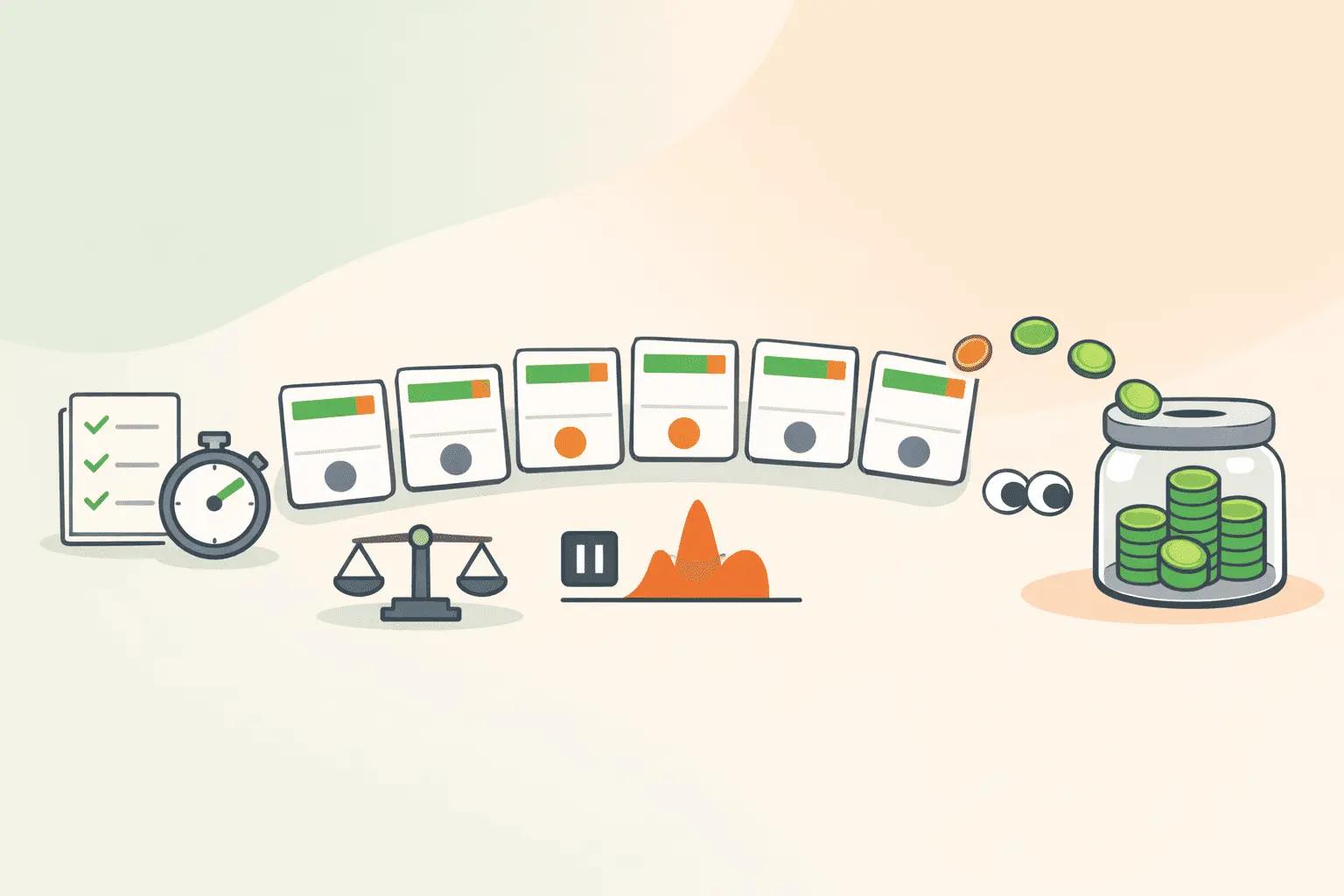
You don’t need to overhaul everything at once and "live by a budget" starting Monday. One week is enough to feel that money no longer lives entirely on its own.
Days 1–2. Open your transaction history for the last 30 days. Don’t analyze — just scroll. Note large payments and recurring debits. The goal is to see the real picture, not "how it should be."
Day 3. Identify 5 categories covering most expenses: food, housing and utilities, transport, shopping/entertainment, other. Assign main transactions to them. Don’t aim for perfect accuracy — just get a sense of scale.
Days 4–5. Find recurring expenses — those debited monthly or weekly: subscriptions, delivery, coffee on the way, taxi instead of bus. Sum each group separately. This shows which habits really cost money and which just seem trivial.
Day 6. Choose one financial goal — specific, with an amount and approximate deadline. Write it down in any convenient form. It could be an emergency fund, equipment, vacation, treatment, education — whatever matters most now.
Day 7. Decide how you’ll track expenses going forward: notes, spreadsheet, banking app, or a dedicated tool. The main thing is it takes no more than a couple of minutes a day. Kopium fits well: you can set categories, see transaction history, tag places and contacts, link expenses to goals, and track expenses from phone or laptop without complex setup or mandatory sync.
These seven days aren’t to "become a different person." Their purpose is to remove blind spots and reduce financial anxiety. When you stop acting blindly, it’s easier to answer "how to control expenses" and "how to organize personal finances" without harsh restrictions.
If you feel money is chronically insufficient even with a normal income, that’s a separate topic — about expense structure and habits. It’s covered in detail in the article on why money is never enough.
Do today
- Open your transaction history for the last 30 days — right now, it takes a couple of minutes.
- Find the most surprising expense category — where the real amount differs most from your estimate.
- Calculate how much you spend on one of the "invisible" categories: coffee, delivery, marketplaces, or eating out.
- Write down one financial goal with a specific amount and deadline — even just a note on your phone.
- Choose one simple way to track expenses for the next week — one you can realistically keep without heroics.
- Review subscriptions: cancel at least one you’ve long forgotten about.
Order in your finances doesn’t start with a perfect budget or strict bans. It starts with the first honest look at the numbers and small, regular steps. After that, living with money becomes calmer.