How Families Can Get a Personal Income Tax Refund for Medical Treatment, Education, and Sports in 2026
Social Tax Deductions and the Family Budget

Over the course of a year, a family can easily spend ₽80,000 on dental care, ₽60,000 on a child's education, and another ₽36,000 on sports clubs or fitness. Altogether, this is a significant amount, especially alongside other mandatory payments.
The government is willing to refund part of this money through social personal income tax (PIT) deductions. Not in every case and not in full, but more often than most families expect.
The actual refund amount depends on five factors:
- how much PIT was withheld from your salary during the year,
- what exactly you spent on,
- the applicable limits,
- whether you have retained the documents,
- whether you are legally entitled to the deduction.
If even one of these points is missing, there will be no refund. Below is a step-by-step guide without complicated jargon.
What Is a Social Tax Deduction — Without Tax Jargon
PIT is 13% withheld by your employer from your salary and sent to the budget.
A social tax deduction is the right to reduce the portion of your income subject to PIT by the amount of certain expenses (medical treatment, education, sports, etc.).
Simply put: the government recognizes that part of your income was spent on socially important things and says, "You don’t have to pay tax on this part of your income." If you already paid the tax, part of it is refunded.
A PIT refund is not a gift or a new source of income. It’s your own money that you previously paid as tax.
Key limitation: you can only get back what was actually paid in PIT. If ₽30,000 was withheld from you during the year, you cannot get back more than ₽30,000, even if your expenses are large and formally qualify for deductions.
Who Can Get the Deduction
The right to a social deduction belongs to a Russian tax resident who:
- Receives official income subject to 13% PIT (salary, civil contracts, etc.).
- Paid eligible expenses themselves:
- for themselves;
- for their spouse;
- for children under 18 (or under 24 if studying full-time);
- for parents (for medical treatment).
- Can confirm payment and purpose of expenses with documents.
Who usually cannot get this deduction:
- self-employed without parallel income taxed at 13%;
- individual entrepreneurs on simplified tax system, patent, or agricultural tax without income taxed at 13%;
- people with "gray" salaries from which PIT is not actually paid.
In families with two officially employed spouses, expenses can be split between them. Sometimes this allows for more effective use of limits and paid PIT.
Eligible Expenses: Medical Treatment, Education, Sports
Medical Treatment and Healthcare
Social deductions for medical treatment cover:
- services from medical organizations licensed in Russia: doctor visits, diagnostics, tests, dentistry, surgeries;
- purchase of medicines with a doctor’s prescription (special prescription form);
- insurance premiums under voluntary medical insurance contracts.
It is important to distinguish two types:
- Regular treatment — counted within the general social limit (shared for treatment, sports, own education, and some other expenses).
- Expensive treatment — separate category with no limiting cap: deduction applies to the full amount.
The list of expensive treatments is approved by the Russian Government. The clinic’s certificate includes a code:
- "1" — regular treatment (counts toward the general limit);
- "2" — expensive treatment (outside the limit).
This is not a minor detail but can affect calculations by tens of thousands of rubles.
Not eligible for deduction:
- purely cosmetic services without medical indications;
- sanatoriums and spas without a medical license for treatment;
- dietary supplements, vitamins, and medicines without the prescribed form of prescription.
Education: Own, Child’s, Siblings’
The "tax deduction for education" covers more than just university.
You can get a PIT refund for:
- your own education — full-time, part-time, online, provided the institution has an educational license;
- education of a child up to 24 years old in full-time form (schools, colleges, universities, additional education);
- education of a brother or sister up to 24 years old in full-time form.
Eligible institutions:
- schools, universities, colleges;
- driving schools;
- language courses;
- music and art schools;
- other licensed educational centers.
Conditions: the organization must have a license, and payments must be verifiable.
Not eligible:
- private tutors without individual entrepreneur registration;
- informal hobby groups without formal registration;
- any courses without a license (even if useful).
Sports and Physical Wellness Services
This is a separate, relatively new category — tax deduction for sports (physical wellness services).
Included are:
- fitness club memberships;
- swimming pools;
- sports clubs for children and adults;
- other services listed by the Ministry of Sports.
Key condition: the organization must be in the special Ministry of Sports registry. The registry is updated regularly; clubs can be added or removed.
If the club is not in the registry, there is no right to deduction, even if you have perfect receipts and contracts.
Therefore, before paying for an annual membership or sports club, it’s worth:
- Visiting the Ministry of Sports website to check the organization by TIN/name;
- Confirming that the legal entity listed in the contract and receipt is in the registry.
Two minutes of checking can save a year of disappointment.
Deduction Limits: How Much You Can Get Back and What It Depends On
Limits are the maximum amounts of expenses allowed for deduction calculation. The limits apply to expenses, and the refund is 13% of the amount within the deduction but not more than the PIT paid.
As of preparing this material for 2024 expenses and beyond, the following limits apply (check the current figures on the Federal Tax Service website before filing):
| Expense Type | Deduction Limit | Maximum Refund |
|---|---|---|
| General social limit (treatment, sports, own education, etc.) | ₽150,000/year | up to ₽19,500 |
| Education of each child (full-time, up to 24 years) | ₽110,000/year | up to ₽14,300 |
| Expensive treatment | no limit | 13% of the full amount |
Notes:
- General social limit ₽150,000 — per person per year. It includes:
- regular treatment;
- sports;
- own education;
- some other social expenses.
- Child’s education is counted in addition to this limit, with its own cap of ₽110,000 per child per year.
- Expensive treatment (code "2") is not limited by the ₽150,000 cap: deduction applies to the full amount.
Example: You spent ₽80,000 on treatment and ₽50,000 on sports. Total ₽130,000 — fully within the ₽150,000 limit. Adding ₽40,000 for your own courses makes ₽170,000 expenses, but the deduction is still calculated on a maximum of ₽150,000.
Keep in mind the PIT actually paid. If limits allow a ₽25,000 refund but you only paid ₽18,000 in PIT during the year, only ₽18,000 will be refunded.
Mini Case: Family and Three Types of Expenses in a Year
A family of three: Andrey, Svetlana, and their 11-year-old daughter Kira.
In 2025, they paid for:
- Andrey’s dental care (regular treatment, code "1" in the certificate) — ₽80,000;
- Kira’s education at a licensed language school (full-time additional education) — ₽60,000;
- Svetlana’s fitness club (club is in the Ministry of Sports registry) — ₽36,000.
Total expenses — ₽176,000, but for deductions they are split into two groups.
Step 1. Allocate by Deduction Types
-
Andrey’s treatment — ₽80,000
-
Svetlana’s sports — ₽36,000 Both fall under the general social limit. Sum: 80,000 + 36,000 = ₽116,000 — less than the ₽150,000 limit, so fully accepted.
-
Kira’s education — ₽60,000 This is a separate child education deduction with a ₽110,000 annual limit, so the full ₽60,000 is counted separately.
Step 2. Calculate Theoretical Refund
- For treatment and sports: 116,000 × 13% = ₽15,080
- For child’s education: 60,000 × 13% = ₽7,800
Total possible refund: ₽22,880.
Step 3. Check Paid PIT
Svetlana was on partial maternity leave for half of 2025. Her PIT withheld was about ₽18,000 for the year.
Andrey worked full-time; his PIT was about ₽62,000 for the same period.
If they claimed all expenses on the spouse with lower PIT, part of the deduction would be lost: you cannot get back more than the PIT paid.
Step 4. Distribute Expenses Between Spouses
The family chooses:
- Svetlana claims Kira’s education deduction — ₽7,800, fully covered by her PIT of ₽18,000.
- Andrey claims treatment and sports deduction — ₽15,080, well within his PIT of ₽62,000.
This way, they receive the full possible refund — the full ₽22,880.
This money doesn’t come from nowhere: it would have gone to the budget as tax anyway. The deduction simply returns part of the PIT already paid by the family that spent on treatment, education, and sports.
Step 5. What Helped Not to Lose Money
- Andrey immediately requested a certificate of medical service payment with the code from the clinic. It could be obtained later but with the risk of extra hassle.
- Kira’s language school sent a certificate of education and a copy of the license upon request by email.
- Svetlana checked the TIN of the fitness club’s legal entity against the Ministry of Sports registry — the club was listed under a different name but with the same TIN.
If they had remembered the deduction only in May using bank statements and faded paper receipts, some expenses would have been lost.
Required Documents for Each Expense Type
The tax authority needs proof of two things: that you paid for the service and that it qualifies for the deduction.
For Medical Treatment
- Contract with the medical organization (if any) or referral for treatment.
- Certificate of medical service payment in the prescribed form (issued by the clinic; indicates code "1" for regular treatment or "2" for expensive treatment).
- Cash receipts, invoices, bank statements with clear payment purpose.
- For medicines — prescriptions form 107-1/у and pharmacy receipts.
- For voluntary medical insurance — insurance contract and payment documents.
For Education
- Contract with the educational organization.
- Copy of the license (often license details are in the contract — a separate copy may not be needed).
- Payment documents: receipts, invoices, payment orders.
- For child’s deduction — birth certificate and certificate of full-time education.
For Sports
- Contract with the physical wellness organization or membership with details.
- Receipts and invoices for payment.
- For child’s deduction — birth certificate.
- TIN of the organization to verify in the Ministry of Sports registry (preferably before purchasing the membership).
Small but important note: clinics are obliged to issue the medical payment certificate upon request. The earlier you ask (at payment or early next year), the easier it is. After two years, it becomes a quest involving archives and staff changes.
Two Ways to Get the Deduction: Through the Tax Service and Through the Employer
1. Through the Federal Tax Service (FNS) via 3-NDFL Declaration
This is the classic method where you file a 3-NDFL tax declaration for the previous year.
Suitable if:
- you have already paid for treatment, education, or sports;
- you want to get the deduction in one lump sum;
- you are not in a hurry and can wait several months.
How it works in practice:
- At the start of the year, log into your personal taxpayer account at nalog.ru.
- Check if the 2-NDFL certificate from your employer has been uploaded (usually by February–March).
- Gather scans/photos of contracts, receipts, and payment certificates.
- In your account, select "Fill out 3-NDFL declaration," mark the social deduction sections.
- Attach supporting documents and submit the declaration online.
- Wait for the desk audit — up to 3 months.
- After the audit, submit a refund request (a couple of clicks in the account). By law, the money is transferred within 1 month after the audit.
So, from submitting the declaration to receiving money usually takes up to four months. Planning to get "money in March" for a May vacation is risky.
2. Through the Employer in the Current Year
Here you don’t wait until year-end but ask your employer to temporarily stop withholding PIT from your salary until you "earn" the deduction.
Suitable if:
- expenses have already occurred and you want a faster refund;
- you prefer to receive the refund in parts as slightly higher net salary.
Procedure:
- Collect documents for expenses (treatment, education, sports).
- Apply to the FNS — via personal account or in person — for a notification of the right to deduction.
- Receive the notification and give it to your employer’s payroll department.
- The employer stops withholding PIT (fully or partially) from your salary until the deduction amount is exhausted.
Result: you receive a slightly higher net salary for several months. It’s the same PIT refund but in the form of "not withheld" instead of "refunded."
Simplified Procedure via FNS Personal Account
Some deductions for treatment, education, and sports can be processed via a simplified scheme without filling out 3-NDFL.
This is possible if:
- the clinic, educational institution, or fitness club submits payment data electronically to the FNS;
- the FNS has generated a pre-filled application based on this data.
What to do:
- At the start of the year, log into your account at nalog.ru.
- Open the section like "Simplified Tax Deductions" (the name may vary).
- Check which expenses have been automatically pulled in.
- Select the deductions you want, verify amounts and account details.
- Sign the application with an electronic signature (generated right in the account).
No need to fill out 3-NDFL. This option is not always available, but when it is, it’s usually faster and easier.
How to Account for Deductions and Expected Refunds in the Family Budget
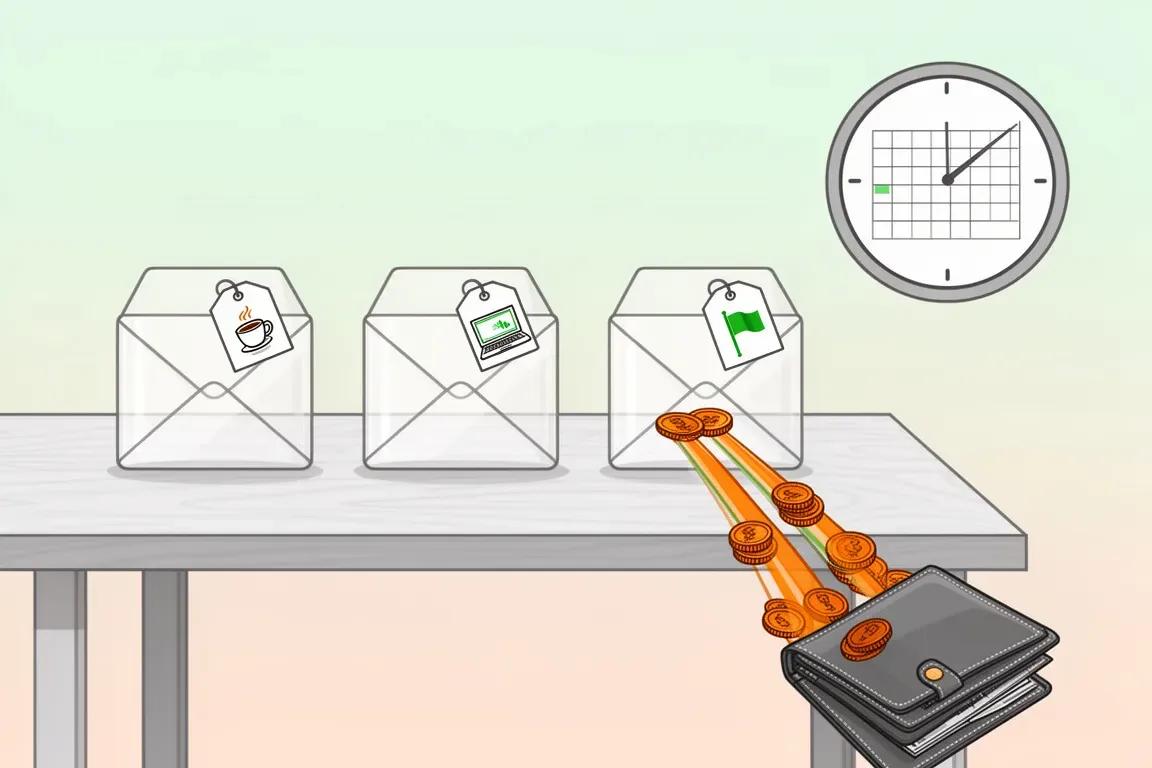
There is a behavioral trait: when money comes "unexpectedly" — a bonus, gift, tax refund — the brain categorizes it as "free money." In behavioral finance, this is called mental accounting — we maintain several internal "accounts" and treat each differently.
The same happens with tax refunds:
- if you count it as "extra" in advance, the money easily goes to spontaneous spending;
- if it’s already included in mandatory expenses before receipt, there’s a risk of cash flow gaps.
It’s better to treat the refund as a return of part of the PIT paid, not as a windfall.
How to Prevent the Refund from Disappearing
Before the money arrives:
-
Assign a specific purpose to the refund. For example:
- topping up an emergency fund (if it’s missing or less than 3–6 months of expenses — see our article on emergency funds);
- paying annual mandatory fees next year — insurance, state duties, part of education;
- planned medical expenses (check-ups, dentistry);
- paying for the next academic year or course.
-
Do not include the expected refund in mandatory expenses before it arrives. Until the money is in your account, it’s not income but a plan. Verification can be delayed, some documents may be rejected, the club may not be in the Ministry of Sports registry — these are real scenarios.
-
Record these expenses in separate categories so you don’t "forget" your right to the deduction. Kopium makes it easy to create special categories:
- "Medical (deductions)";
- "Children’s education (deductions)";
- "Own education (deductions)";
- "Sports/clubs (deductions)".
At year-end, just open a report for these categories instead of reconstructing events from memory and receipts. If you haven’t set up your category structure for the family budget yet, see the guide on setting up expense categories.
Thought: a tax refund is not a surprise or "won" money. It’s the result of paying for important things all year and keeping careful records.
If your family doesn’t yet have a shared accounting system and money talks end in arguments, deductions are a good reason to build one. We cover how to do this without mutual claims in our article Family Budget Without Conflicts.
Common Mistakes That Cost Money
1. Remembering the medical payment certificate two years later. Formally, the clinic must still issue the document, but it becomes an archive hunt with staff changes and extra stress. It’s easier to ask:
- immediately after treatment ends;
- or in January of the following year while the data is fresh.
2. Paying cash without a receipt. For the tax service, it’s important that:
- there is a document from the organization (receipt, invoice, BSO);
- it’s clear you made the payment.
Paying "just by transferring money to a coach’s card" without a contract and receipt won’t qualify. When paying cash, make sure you get a receipt and keep it (better to photograph it immediately — thermal paper fades).
3. Fitness club not in the Ministry of Sports registry. A common case: the club promises a "tax deduction for sports" but is not listed. Or it was listed before but now excluded.
Before paying:
- ask for the TIN of the legal entity in the contract;
- check it on the Ministry of Sports website.
If the organization is not found, relying on the deduction is risky.
4. Treating regular treatment as expensive. The cost alone doesn’t determine the category. You must rely on:
- the type of service;
- the code in the clinic’s certificate.
If the certificate shows code "1," it’s regular treatment subject to the ₽150,000 general limit. Code "2" means expensive treatment with a full-sum deduction. Arguing with the clinic to change the code without grounds is a bad strategy; compliance with the approved list is key.
5. Assigning all expenses to the spouse with lower PIT. If one spouse pays little PIT (part-time, maternity leave, low salary) and the other pays more, it makes sense to:
- estimate their annual PIT in advance;
- understand who benefits more from "receiving" the expenses; sometimes splitting payments between spouses is advantageous.
6. The refund is already "built into" mandatory payments. A family plans: "In March, we’ll get a PIT refund for treatment and pay for summer camp with it." In reality:
- declaration filed in April;
- tax service requests document clarifications in May;
- money arrives in July.
They had to pay for camp from the emergency fund, and the refund replenished it. This is possible but better to plan accordingly.
To reduce such "surprises," it’s worth building a system where mandatory expenses are more predictable — we discuss this separately in monthly spending stability.
When and How to File a Declaration for the Deduction
If you file a declaration only for the deduction (not required for other income), the deadline is more flexible:
- you can do it anytime within three years after the expense year;
- for example, for 2025 expenses — in 2026, 2027, or 2028.
Practically convenient:
- file the declaration in February–March of the following year;
- by then, your personal account usually has PIT data from your employer;
- clinics and educational institutions issue certificates for the previous year without a rush.
If you have an obligation to file a declaration (e.g., you sold property), the general 3-NDFL deadline is April 30 of the following year. You can include social deduction data in it.
Why It’s Better Through the Personal Account
The personal taxpayer account at nalog.ru saves a lot of effort:
- PIT certificates from employers are automatically pulled in;
- the 3-NDFL form is filled out step-by-step;
- documents are attached as scans or quality photos;
- verification statuses are visible online.
If you dislike queues and paperwork, this method is almost always more convenient.
Checklist: What to Do Now to Not Lose Deductions
- Add separate categories in Kopium for expenses eligible for deductions: "Medical (deductions)," "Children’s Education (deductions)," "Own Education (deductions)," "Sports/Clubs (deductions)." This allows quick year-end summaries — see details on category structure in setting up expense categories.
- Collect and organize documents: keep one folder (paper and/or cloud) for contracts, certificates, receipts for treatment, education, and sports. Photograph paper receipts on the payment day — after six months, some will fade.
- Check that everything is properly arranged now: does the educational institution have a license, does the clinic issue the correct certificate, is your fitness club in the Ministry of Sports registry.
- Check your FNS personal account early next year: look for simplified deductions, employer certificates, and preliminary available amounts.
- Assess PIT paid by each spouse: see who pays how much tax annually to understand who should claim expenses when costs are high.
- Decide in advance what the potential refund will be used for: topping up the emergency fund, annual payments, planned medical care, or education. This prevents 20–30 thousand rubles from "disappearing" on gas and food delivery in a couple of weeks.
Tracking such expenses takes just 2–5 minutes a day: mark the payment in Kopium, put the receipt in one folder, and once a year calmly gather everything for the declaration. Not a perfect scheme, but a practical one: no miracles, but predictable results when everything within your control is done.