How Freelancers and Self-Employed Can Separate Personal and Work Money
Three pockets instead of one account

You have money on your card. But it’s unclear whose it is.
A payment arrives from a client — 47,000 rubles. Part goes to tax, part to subscriptions and a new hard drive, but how much is left for you personally is unclear. You spend “by feel,” and by the end of the month, you realize you’ve dipped into someone else’s money: the funds meant for tax.
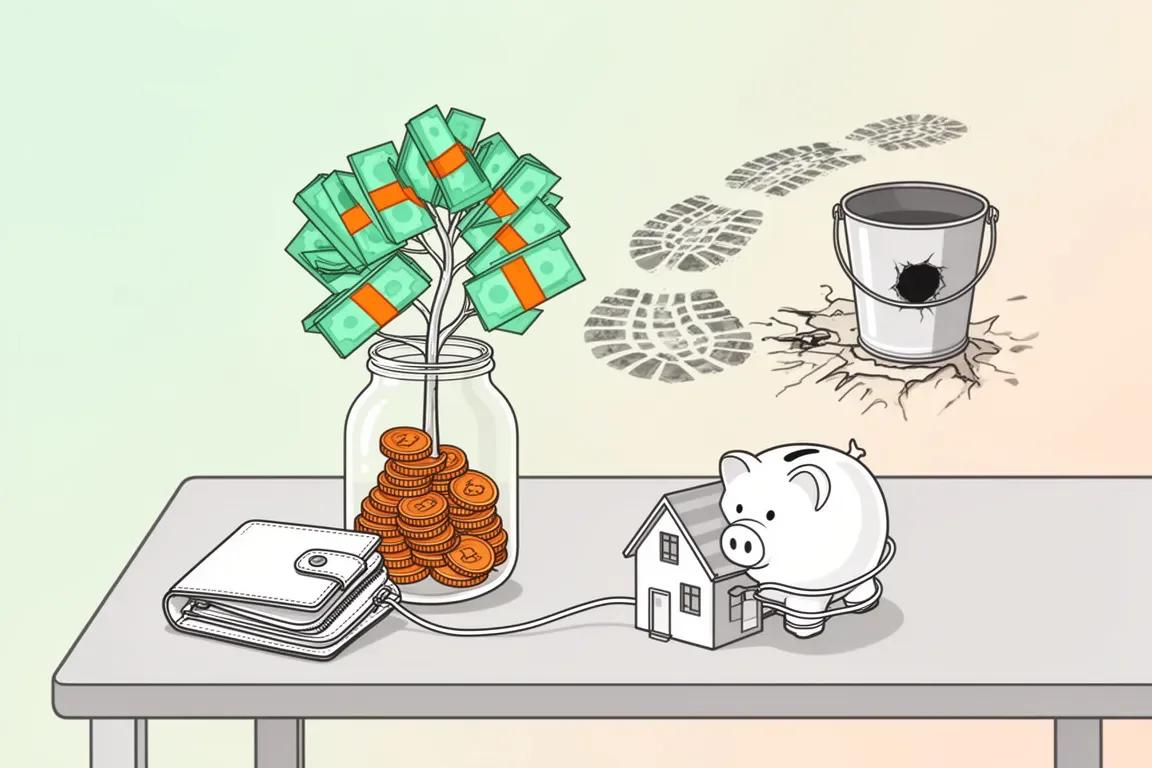
It’s not about income size. Client payments, work expenses, tax reserve, and personal spending all live in one pocket — that’s where clarity breaks down. Once you separate them by purpose, the picture becomes clear.
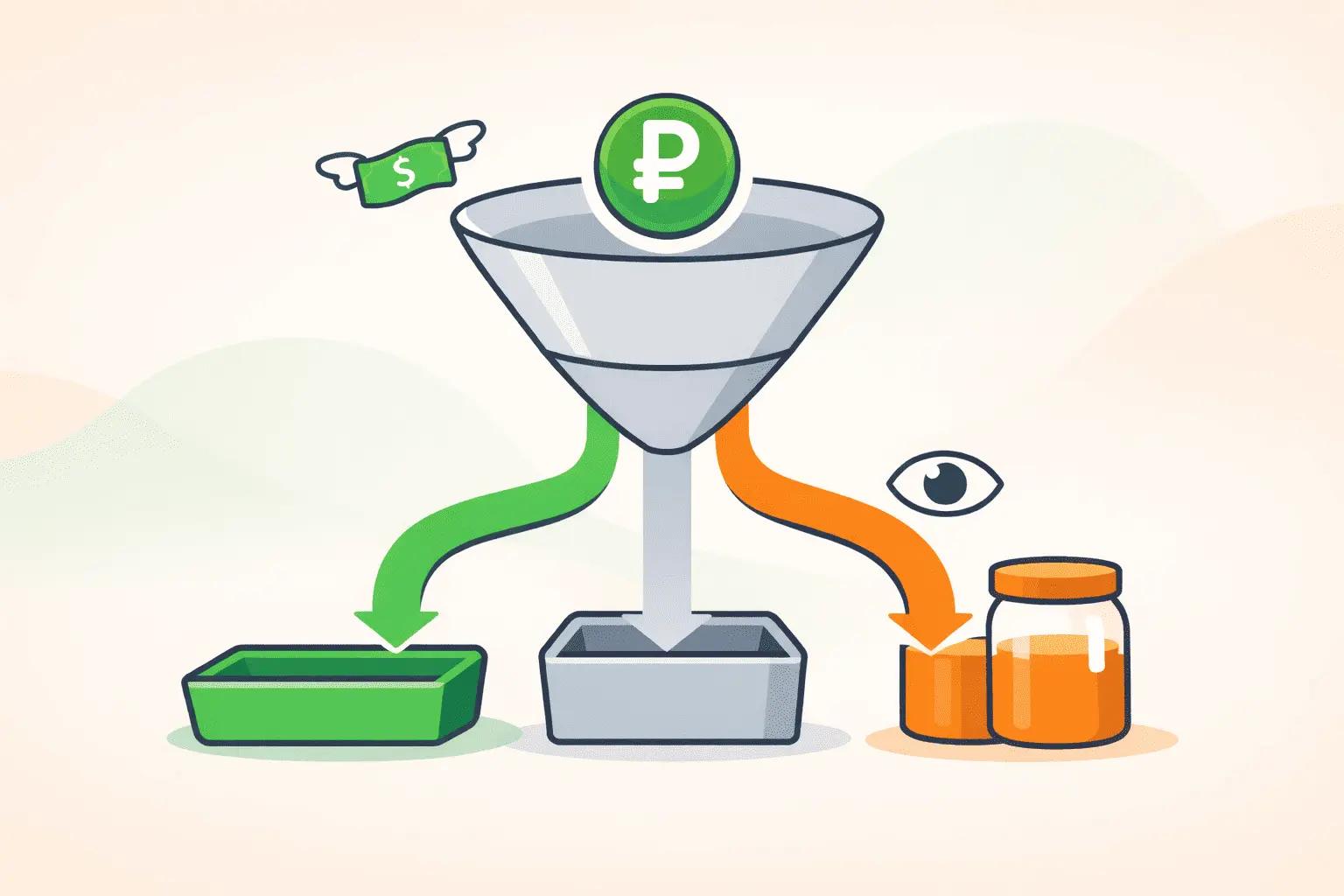
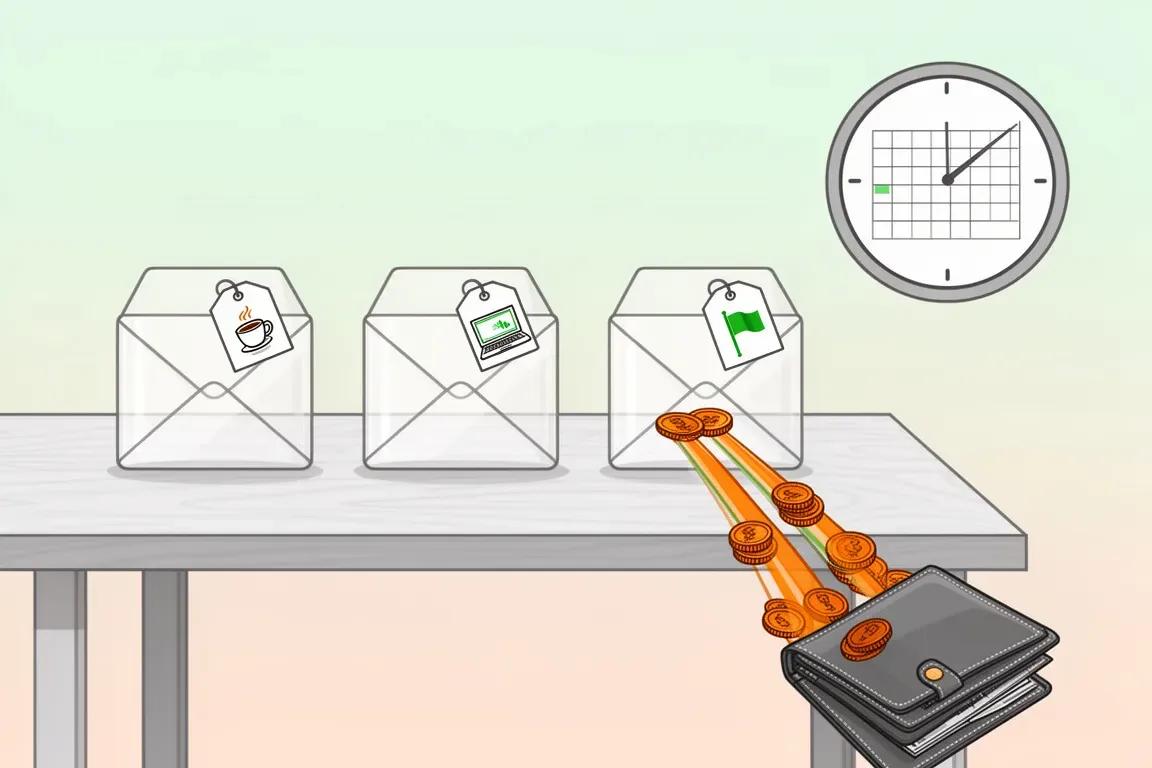
The working model is simple — three pockets: work account, tax reserve, personal budget. Step by step:
- Put all client payments into the work pocket.
- Immediately set aside the tax reserve with each payment.
- Separately record work expenses for the period.
- Transfer the remainder to yourself — that’s your personal budget.
Why Mixing Money Is Not a Small Issue
An employee receives a "net" salary, after taxes. A freelancer receives the gross amount — from which tax must be set aside, work expenses covered, and only then can they see how much is left personally.
When all this is in one place, the brain perceives the entire sum as "yours." This isn’t a character flaw but normal perception: money in the account looks available, so we spend it as such.
What follows is predictable: tax is paid from "personal" money at the last moment, work expenses blur with personal ones, and it’s unclear if the month was profitable at all.
Separation isn’t about three banks. It’s enough to allocate each incoming payment into three purposes, even if the money physically stays in one place.
Three Pockets: How the System Works
Pocket 1: Work Account
All client payments go here. This isn’t "your" money in the full sense but an incoming flow from which tax and work expenses must first be set aside.
The work account is transit. Money doesn’t stay here: you distribute and transfer it further.
Pocket 2: Tax Reserve
Self-employed pay professional income tax: 4% when working with individuals, 6% when working with companies and individual entrepreneurs. The "My Tax" app calculates the amount automatically, but the money doesn’t appear in the account by itself.
A useful habit is to set aside the reserve immediately with each payment. If you mostly work with companies, set aside 7–8%: you won’t need to recalculate each time, and a small buffer remains.
Physically, this can be a separate savings account or just a label in your records. The key is not to touch this money until tax payment.
Pocket 3: Personal Budget
What remains after the tax reserve and work expenses is your "salary." This is what you should transfer to your personal account and plan personal spending from.
When the personal budget is separated from the work flow, clarity appears: this is how much I have for living this month. Not "approximately," but exactly.
How to Start the System: Step by Step
Step 1. Identify Work Expenses
First, list what you spend on work. Usually, this includes:
- subscriptions to professional services (design, development, marketing)
- equipment and hardware for work
- training and professional courses
- communication and internet — the portion used for work tasks
- software and licenses
Personal purchases don’t belong here, even if bought "also for work." The boundary must be clear, or the work pocket will start absorbing the personal budget.
Step 2. Calculate Average Monthly Work Expenses
Take the last 2–3 months, sum all work expenses, and divide by the number of months — this gives a benchmark. It shows how much from each payment goes back into work.
If expenses are irregular (e.g., buying equipment once a year), divide the annual amount by 12 and allocate monthly. This way, large one-time expenses don’t hit a single month.
Step 3. Set Up Allocation on Receipt
When a client payment arrives, immediately do three things:
- Set aside the tax reserve (7–8% of the amount if working with companies).
- Record work expenses for the period or set aside their share.
- Transfer or mark the remainder as personal budget.
This takes 2–3 minutes. No need to wait until month-end — allocate immediately while the amount is fresh.
Step 4. Track Three Money Flows
Create separate accounts or categories for each pocket:
- Work income — client income
- Work expenses — all work-related spending
- Tax reserve — money set aside for tax
- Personal budget — money moved to personal use
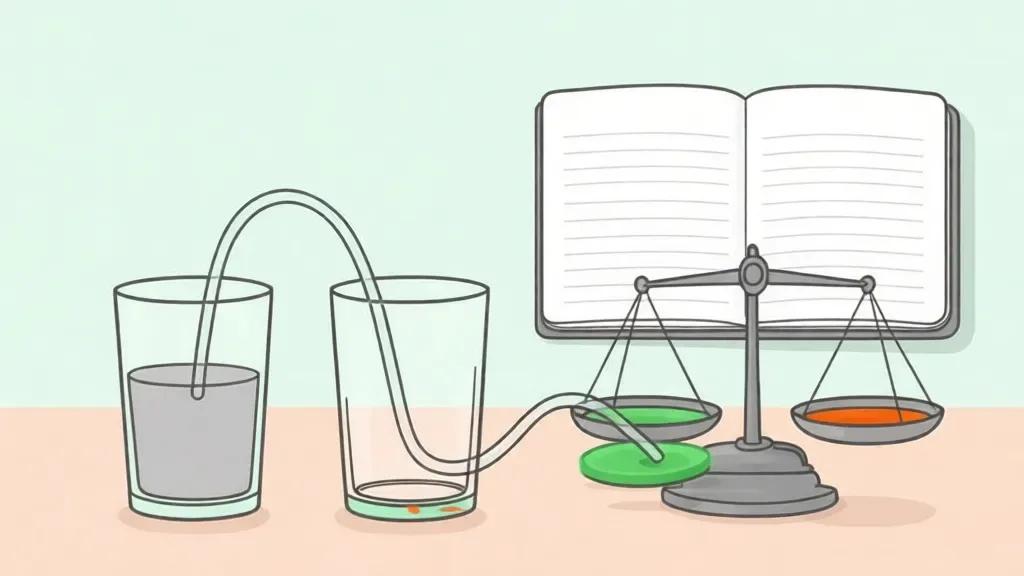
When flows are separated, you can always see: how much came in this month, how much went to work, how much is reserved for tax, and how much is really yours. If it’s still unclear where money goes, start with a basic expense analysis and build separation on top.
Step 5. Monthly Reconciliation
Once a month, spend 15–20 minutes:
- Compare income and work expenses — how profitable was the month.
- Check the tax reserve — is it enough for the upcoming payment.
- Record the final "salary" — the amount moved to the personal budget.
This isn’t accounting. It’s a look at three numbers once a month.
Case Study: Designer, Two Clients, and a Mixed-Up Month
Artyom is a self-employed designer working with several clients. In April, he received two payments: 38,500 and 24,000 rubles. Total 62,500.
That month, he bought a new tablet for 18,600 (needed for work) and renewed subscriptions to Figma and stock photos — another 3,200. Plus, he went to a restaurant with his family, bought sneakers, and paid for a kids’ club — about 14,000 total.
By month-end, about 26,000 remained on the card, and Artyom thought the month was "normal." But when tax time came — 3,750 rubles (6% of 62,500) — it turned out he had already spent it. He had to borrow from next month.
His expenses were reasonable. The problem was that work purchases, personal spending, and tax were mixed together. If Artyom had immediately set aside 3,750 for tax and separately accounted for work expenses (21,800), he would have seen: April’s personal budget was 36,950 rubles. Of that, he spent 14,000 on personal items. Everything adds up, no borrowing needed.
The reserve is no longer your money. From the moment you receive payment, it belongs to tax. The sooner you accept this, the fewer surprises at quarter-end.
What to Do with Irregular Income
Freelance income is rarely steady. One month three big projects, the next — silence. The three-pocket system works here too, but with one adjustment.
Don’t spend the entire remainder in a "fat" month.
When a lot comes in, the temptation is strong to spend everything left after tax and work expenses on personal needs. But the next month might be empty.
A simple rule: define your "normal monthly salary" — the amount you want to consistently spend on personal needs. In good months, transfer only that amount to yourself, leaving the rest in the work pocket as a buffer. In lean months, draw from the buffer.
This isn’t complicated math but a habit of not spending everything immediately. How to build such a buffer and plan spending with fluctuating income is detailed in budgeting with irregular income.
Common Mistakes When Separating Money
Mixing work and personal purchases in one category. Bought headphones — for work or personal? If not decided immediately, a gray zone appears in records and grows.
Setting aside the reserve "later." "I’ll set it aside later" almost always means "I’ll pay from personal." It’s better to set aside the reserve at receipt — mechanically, without thinking.
Treating the work account as personal. Client payment is not personal income but revenue from which obligations must be deducted. Only what remains after allocation becomes personal.
Overcomplicating separation. Three pockets are the maximum needed at the start. Don’t open five accounts, build formula tables, or split internet costs to the ruble between work and personal. A simple system you follow is better than a perfect one you abandon in two weeks.
Revising the system every month. Let it work 2–3 months before changing anything. At first, it may feel "off" — that’s normal. The system adjusts to reality, not expectations.
If the system requires heroism, it’s bad. A good one works almost by itself: money arrives → tax set aside → work expenses recorded → salary transferred.
How to Set Up Tracking in Kopium
In Kopium, the three-pocket system is easy to organize with accounts and categories. Create three accounts:
- Work — for client payments
- Tax reserve — transfer the reserve here with each payment
- Personal — your personal budget
When a payment arrives, record it in the work account, then make two transfers: part to the tax reserve, the remainder (after deducting work expenses) to the personal account.
Work expenses are best tracked with separate categories: "Work subscriptions," "Equipment," "Training." This way, you can always see the real cost of your work. If categories aren’t set up yet, start with clear expense category setup — everything else will build on it.
Tags help in ambiguous cases: if a purchase is partly work, partly personal — split the transaction or tag it for later analysis.
Take Action Today
No need to rebuild everything at once. Start right now:
- Review expenses for 2–3 months and list all work-related spending.
- Calculate the average monthly work expenses — this is your benchmark.
- Determine the reserve percentage: 4% if working only with individuals, 6% with companies, or 7% with a buffer.
- At the next payment, immediately set aside the tax reserve and record work expenses.
- Transfer the remainder to the personal budget — this is your project salary.
Five steps, the first takes about ten minutes.
When the three pockets are separated, the main source of freelancer anxiety disappears — the feeling that money is there, but how much exactly is unclear. Instead of a feeling, you get a concrete number. And with a number, you can live more calmly.