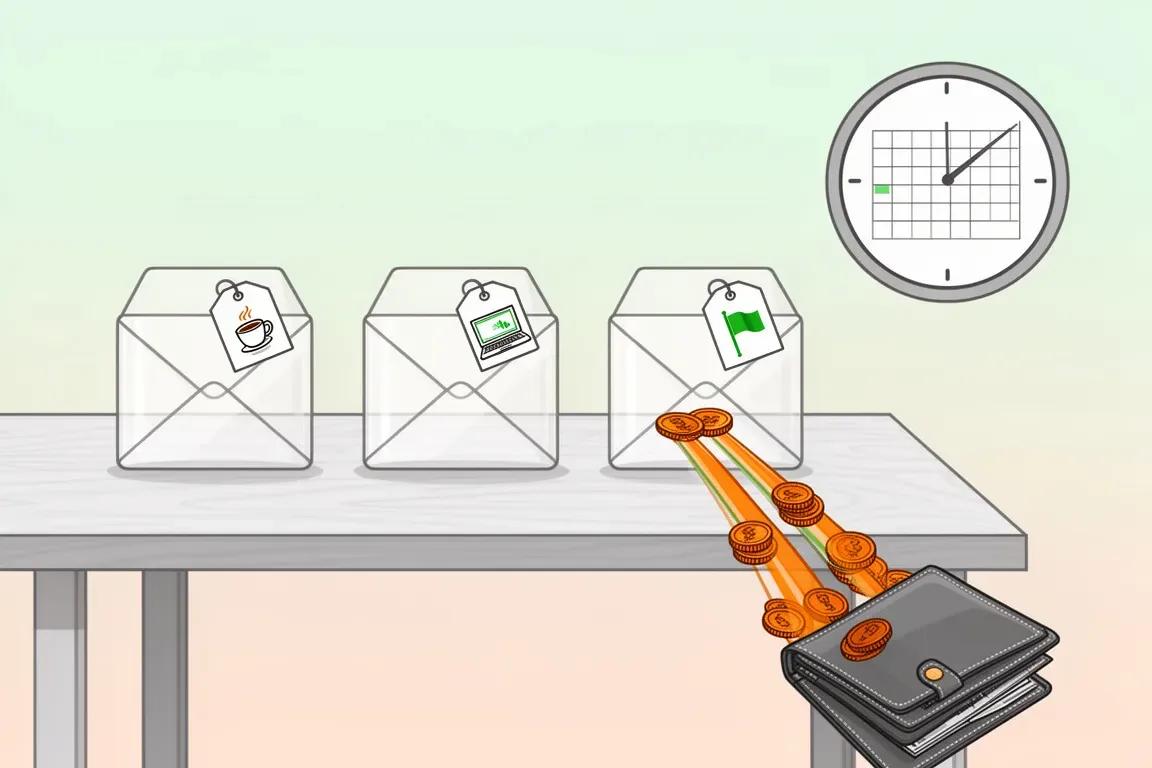

Everyone has a recurring style of handling money. It’s not about being "right" or "wrong" — just personal. Some always know how much is left until payday. Others find their money mysteriously gone by month’s end. Some save but hardly allow themselves to spend.
This isn’t about willpower or "I just don’t know how to manage money." Most often, it’s about financial behavior and money habits developed over years.
A financial personality type is a convenient model for self-observation. It’s not a diagnosis or a verdict but a way to understand your typical decisions: how you spend, save, and relate to credit and financial security. Then you can tailor your personal budget accordingly.
Below the article is an interactive 10-question mini-test. It doesn’t collect personal data and is only for self-observation. After getting your result, return to the explanation of your type in the article.
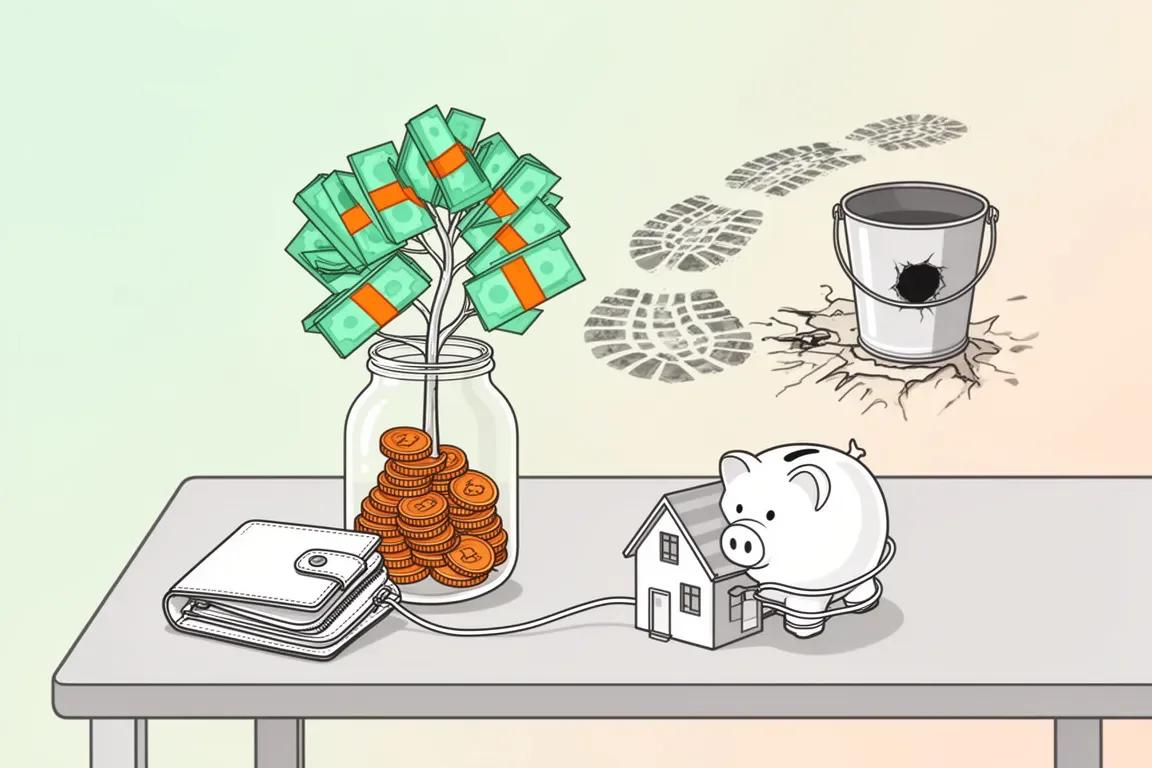
Explanation: 6 Financial Types
No type is "right" or "wrong." Each has strengths, risks, and its own convenient personal budget management rules.
Planner (A)
How they handle money. Knows how much is spent on food, transport, and entertainment. The personal budget is detailed by category. Goals are specific: amount, deadline, purpose. Life feels easier when everything is under control. If the plan breaks down, financial anxiety rises.
Strengths.
- Has a clear view of expenses.
- Rarely faces acute financial crises.
- Can save for specific financial goals.
Risks.
- Rigid plans hinder adapting to life: vacations, gifts, unexpected expenses.
- Unstable income disrupts planning: "how to plan if salary fluctuates."
- Risk of turning expense control into micromanagement, which tires both Planners and their close ones.
What helps.
- "Spontaneous" category. Add a budget amount for "whatever you want" — 5–10% of income. This isn’t chaos but conscious spending without guilt.
- Range, not a single figure. Instead of "18,000 on food," try "17,000–19,000." A bit more flexibility means fewer breakdowns.
- Separate plan for unstable income. If income fluctuates, base the budget on a "minimum level," and divide the surplus: part for goals, part for enjoyment.
Impulsive Buyer (B)
How they handle money. Money is spent easily and quickly. Impulse purchases often bring pleasure and help "switch gears." Sales, discounts, new subscription services, "while in the mood" — all get included in spending. At month’s end, the question arises: "Where did it all go?"
Strengths.
- Knows how to enjoy money here and now.
- Doesn’t get stuck in endless planning and calculations.
- Often generous with loved ones, able to share joy.
Risks.
- Difficult to save for big financial goals: renovation, vacation, emergency fund.
- Loans, installments, and subscriptions can accumulate unnoticed: each payment seems small.
- Financial anxiety hits at month’s end when money is low but bills remain.
What helps.
- 48-hour rule. Any unplanned purchase over, say, 2,000–3,000 rubles should wait two days, not be immediate. Usually, the urge cools down.
- Fixed limit on "wants." For example, 8,000 rubles per month for spontaneous spending. Once spent, the limit is reached, but no guilt: you’re within the rule.
- Savings in a separate "box." As soon as money arrives, part automatically goes to a separate account or card that requires effort to access. This protects savings from impulses.
Note: Impulse purchases rarely mean "I can’t save." More often, they reflect fatigue, stress, boredom, or a desire to treat oneself. If you notice you mostly spend when tired, that’s already a step toward controlling expenses.
Cautious Saver (C)
How they handle money. Regularly sets money aside. Spends carefully, sometimes overly so. Savings exist, but the feeling of financial security remains fragile: "what if it’s not enough." May even save on essentials — clothes, health, rest.
Strengths.
- Resilient to financial shocks.
- Rarely takes loans or credit.
- Clearly distinguishes between "want" and "need," able to save without drama.
Risks.
- Financial anxiety persists even with decent savings.
- Tends to save "in general" instead of linking money to specific financial goals.
- Money is in accounts, but quality of life barely changes.
What helps.
- Define "enough." Decide the size of your emergency fund: for example, 3–6 months of basic expenses. After reaching this, direct extra funds to other goals.
- Goals with dates and meaning. Not just "saving," but "210,000 rubles by November for moving." Then spending on the goal isn’t scary.
- Budget for enjoyment. Include a fixed amount for conscious spending: hobbies, rest, gifts to yourself. This reduces internal conflict between "saving" and "living."
Avoider (D)
How they handle money. Tries to think less about money: bills, bank notifications, talks about personal budget cause discomfort. No specific financial goals, savings are accidental. Often feels: "I don’t want to get into this; it’ll be bad anyway."
Strengths.
- Less overload from numbers and calculations in the moment.
- Doesn’t make money the center of life.
- Sometimes intuitively stays within limits without harsh restrictions.
Risks.
- Financial problems are noticed late: when there’s nothing to pay bills or a serious emergency occurs.
- Savings are either absent or small and unstable.
- Avoidance increases background financial anxiety: "something scary is there; better not look."
What helps.
- Minimal tracking format. Don’t start with spreadsheets and 20 categories. One step: once a week, take a screenshot of your balance and note 3–5 largest expenses for the week. It takes 5 minutes.
- One account for reserves. As soon as money arrives, a small fixed amount (e.g., 2,000–3,000 rubles) goes to a separate "reserve" account. Don’t count it, just save.
- Separate time for money. Instead of thinking about finances constantly, set one short weekly slot — 10–15 minutes. The rest of the time, honestly tell yourself: "I’ll think on Sunday."
Important: Avoiding finances isn’t laziness or "irresponsibility." It’s often protection from anxiety and past negative money experiences. Small, safe steps work better than trying to achieve perfect order in one evening.
Optimizer (E)
How they handle money. Likes to count, compare, optimize. Understands tariffs, discounts, cashback, family budget formats. Tables, categories, reports — not punishment but an interesting task. May spend a lot of time searching for the "best deal."
Strengths.
- Controls expenses and personal budget well.
- Sees where to cut costs without losing quality of life.
- Clearly understands where money goes and which consumption habits drain the budget.
Risks.
- Can get stuck in comparison and analysis, delaying real decisions: "I haven’t calculated everything yet."
- Focusing on saving small amounts sometimes distracts from big financial goals.
- Loved ones may find endless discussions about the best place to buy each item exhausting.
What helps.
- Limit analysis time. Before deciding, set a limit: "I’ll spend no more than 30 minutes choosing." After time’s up, pick from the two best options.
- Focus on big expenses. Optimize major items first — housing, transport, regular services — not small purchases of 200 rubles. This yields more impact.
- Simple rules for small expenses. For example: "everything under 1,000 rubles — no deep analysis, just basic necessity check." Saves time and energy.
Generous / Social Type (F)
How they handle money. Financial behavior is closely tied to relationships. Easily spends on loved ones, family, friends, group gifts. Often pays "for everyone," organizes joint trips and celebrations. Their own needs and financial goals take a back seat.
Strengths.
- Creates a warm, supportive atmosphere around themselves.
- Knows how to turn money into shared experiences and care.
- Often unites people around common goals: vacation, holidays, gifts.
Risks.
- No money or attention left for personal goals.
- Finds it hard to refuse money requests or help, even when it hurts the personal budget.
- Savings grow slowly, and financial security feels "selfish."
What helps.
- "Put yourself first" principle. At the start of the month, set aside a fixed amount for your financial goals (health, education, emergency fund). The rest can be used as before.
- Limit on help. Decide in advance a comfortable monthly amount for gifts and support. This doesn’t reduce generosity but makes it sustainable.
- Shared goals. Frame some goals as "we": not "I’m saving," but "we’re saving for vacation/renovation/education." It’s easier to care for yourself and loved ones simultaneously.
Type Comparison
To better see yourself from the outside, here’s a table of financial personality types.
| Type | Main Strength | Main Risk | Where to Start |
|---|---|---|---|
| Planner | Expense control and budget predictability | Rigidity, low flexibility | Add a "spontaneous" budget |
| Impulsive | Lives in the moment, enjoys money | Money disappears quickly, hard to save | Set limits and 48-hour rule |
| Cautious Saver | Stability, emergency reserve | Anxiety persists despite savings | Fix a "sufficient" emergency fund |
| Avoider | Less overload from numbers in the moment | Problems noticed too late | One short weekly "money" slot |
| Optimizer | Clear expense picture, savings | Analysis instead of action | Limit time for "perfect" choice |
| Generous / Social | Warm relationships and shared experiences | Own goals funded residually | Save "for yourself" before others |
Practical Tips by Type
How to budget without forcing yourself
Choose an expense tracking format that fits your financial behavior type. The same Excel sheet helps some but burns others out in a week.
For Planners:
- Category tracking (food, transport, housing, entertainment);
- Goals with amounts and deadlines;
- Monthly review: where you went off track, what to change.
For Optimizers:
- Detailed tracking: categories, subcategories, reports;
- Compare months, find patterns;
- Test different personal budget formats to see their impact on expense control.
For Impulsive types:
- Strict category tracking quickly bores them. Better:
- One simple frame: "X amount per month for free spending";
- Anything beyond the limit goes through a pause and check;
- Large purchases are pre-listed with approximate dates.
For Cautious Savers:
- More important than tracking every purchase is clarity on savings:
- Track emergency fund size and goal progress;
- See what can be spent without breaking financial security;
- Use notes like "this is for comfort/health/future" to spend more calmly.
For Avoiders:
- Need the easiest format:
- Once a week open the tracking app or a note on the phone;
- Record only major expenses for the week (3–7 lines) and total income;
- Don’t demand perfect accuracy — just understand the order of numbers.
For Generous types:
- Helps to have separate categories or accounts "for others" and "for self";
- Limits on gifts and help that don’t break the personal budget;
- Reminder that self-care is part of caring for loved ones, not its opposite.
If you want flexible tracking from any device without bank linking, apps like Kopium allow creating your own categories, tags, and accounts, offline tracking, and syncing when convenient.
How to control impulsive purchases
Financial psychology shows: between "I want to buy" and the actual purchase, there’s a short window to regain control. The goal isn’t to forbid everything but to reduce impulsive decisions.
Effective methods:
-
Wish list. Instead of buying immediately, add the item to a list: a note, app mark, or "save for later" cart. Return after 48 hours. If the desire fades, you just saved money.
-
Monthly "want" limit. Set an amount you can spend without explanation: e.g., 5–10% of income. Spending within this limit is conscious. Above it requires a pause and review.
-
One check question. "Would I buy this tomorrow at the same price without a discount or timer?" If "no," it’s likely marketing, not need.
-
Disable aggressive triggers. Unsubscribe from newsletters, sale notifications, pop-ups like "last chance." Fewer triggers mean fewer impulsive expenses. It’s about environment, not willpower.
How to set financial goals by personality
The phrase "I should start saving" rarely turns into actual savings. A financial goal works when it’s:
- specific (amount),
- time-bound (deadline),
- meaningful (purpose).
Examples:
- "78,000 rubles by May for a vacation in Turkey";
- "30,000 rubles by September for dental/health";
- "60,000 rubles per year for emergency fund."
Then adapt by type:
- Planners and Optimizers like to break goals into monthly parts and embed contributions in the budget: "6,500 rubles per month for 12 months."
- Impulsive types need to see the goal: picture, progress bar, checklist. Then saving competes with buying desire.
- Cautious Savers benefit from clear rules: "When I reach X, I allow myself to spend on Y without guilt."
- Avoiders should start with a small achievable goal for 1–2 months: "15,000 rubles by end of July." Success shows budgeting and saving are possible.
- Generous types better formulate some goals as "we": "we’re saving for vacation/car/renovation." It’s easier to invest and remember yourself.
How to save if you haven’t before
A common reason savings fail is putting aside money "from what’s left." The pattern is simple: money comes, expenses happen, nothing’s left at month’s end — so nothing to save. Even disciplined people struggle to save this way.
A better approach: save first, then spend the remainder. It’s not about huge amounts. Sometimes a small "mandatory contribution" is enough.
Mini-case. Anton, 34, freelancer, unstable income: 45,000 to 90,000 rubles per month. In good months, he splurged — restaurants, gadgets, emotional purchases. In bad months, borrowed from friends, used installments. Saving "a percentage of income" didn’t work: "when income is low, there’s nothing to save; when high, I spend it."
Anton introduced one rule: in any month, the first 5,000 rubles go to a separate account as soon as money arrives. Whether he earned 48,000 or 86,000. After 8 months, the account had 38,500 rubles — his first stable reserve in years. Income didn’t grow; only the order of actions changed.
A few ideas if "savings don’t happen":
- start with a fixed amount, not a percentage (3,000–5,000 rubles per month);
- set up auto-transfer on payday;
- treat this amount as payment for your financial security, not "extra luxury."
If interested in how to decide on subscriptions and one-time big purchases (especially if you’re Impulsive, Optimizer, or Cautious Saver), see the detailed analysis: subscription or one-time purchase.
Your type is not a verdict
Financial habits form over years: family, environment, experience, fears. Changing them in a week is impossible and unnecessary.
The goal isn’t to become the "perfect" financial personality type. The goal is to find a personal budget and expense control format that works with your character, not against it.
- Planners don’t have to learn to live "without a plan."
- Impulsive types don’t need to become ascetics.
- Avoiders shouldn’t jump into complex tracking with many categories right away.
- Cautious Savers need not only to save but also to allow themselves to spend on life.
- Generous types shouldn’t stop helping but learn not to forget themselves.
Financial behavior can change in small steps.
Do today:
- Take the interactive test below the article.
- Review your main or mixed result and return to the explanation of relevant types.
- Choose one specific step from the "What helps" section.
- Write this step where you often look: notes, planner, tracking app.
- Try to follow it for at least two weeks without strict control or self-criticism.
If something goes off plan — it’s not failure but part of the process. A system that withstands your real slips and fatigue is more useful than a perfect scheme abandoned after a week.
10 вопросов
Мини-тест: определите свой финансовый тип
Тест не оценивает вас и не ставит диагноз. Это модель для самонаблюдения, которая помогает заметить привычные денежные сценарии.