
Does this happen: money is there, but by the 20th your card feels noticeably lighter? In those moments the question "do I need to track my finances" sounds the loudest. Let's answer it without extra discipline.
Short answer: if you get lost in your balance mid-month, have goals, or your income is variable, tracking helps. If income is stable, expenses repeat, and you already have a buffer, you can use simple rules. To be sure, take a 7-day test.

When there is no tracking, the budget leaks: a mini-case with numbers
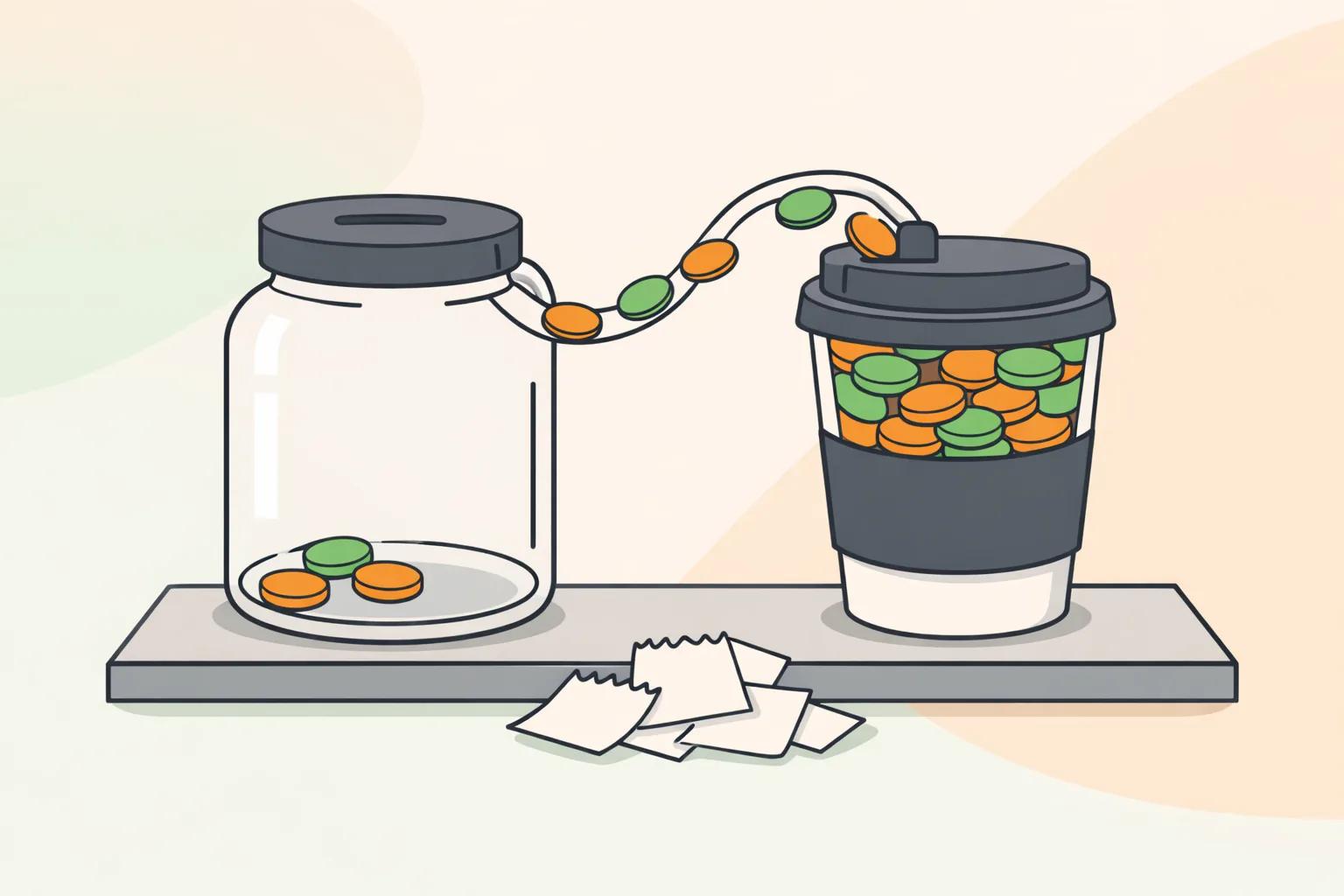
Mini-case. Lily and Max have a combined income of about $2,015 per month. Housing is $584, food is $416, transport is $165, and essentials total $1,164. They thought "other" was about $144, but in one test week they saw about $124 just on delivery and coffee on the way back from a workout. Midweek they forgot to log a couple of receipts and added them on Sunday - the total grew by another $30. After the test they kept 10 categories and set a $189 limit for "other". A month later they set aside $89, and arguments about small purchases became less frequent.
If you recognize yourself, the signs and a short test are the next step.
Signs that tracking is right for you
- Mid-month without a compass: you do not know how much you can spend without anxiety.
- Variable income: the plan drifts each month and cash gaps appear.
- Required payments and goals without rules: everything sits in memory, not in numbers.
- Small items eat a noticeable sum: the feeling is there, the numbers are not.
- Shared budget without agreements: everyone spends "their way".
- Eating out or subscriptions keep surprising you: expectations do not match reality.
Behavioral psychology calls this the self-monitoring effect: when we start logging behavior, it becomes more conscious. That is why even a one-week test reduces blind spending.
Observation: with variable income, plan from the "minimum month" to reduce surprises.
The 7-day test: a fast way to decide
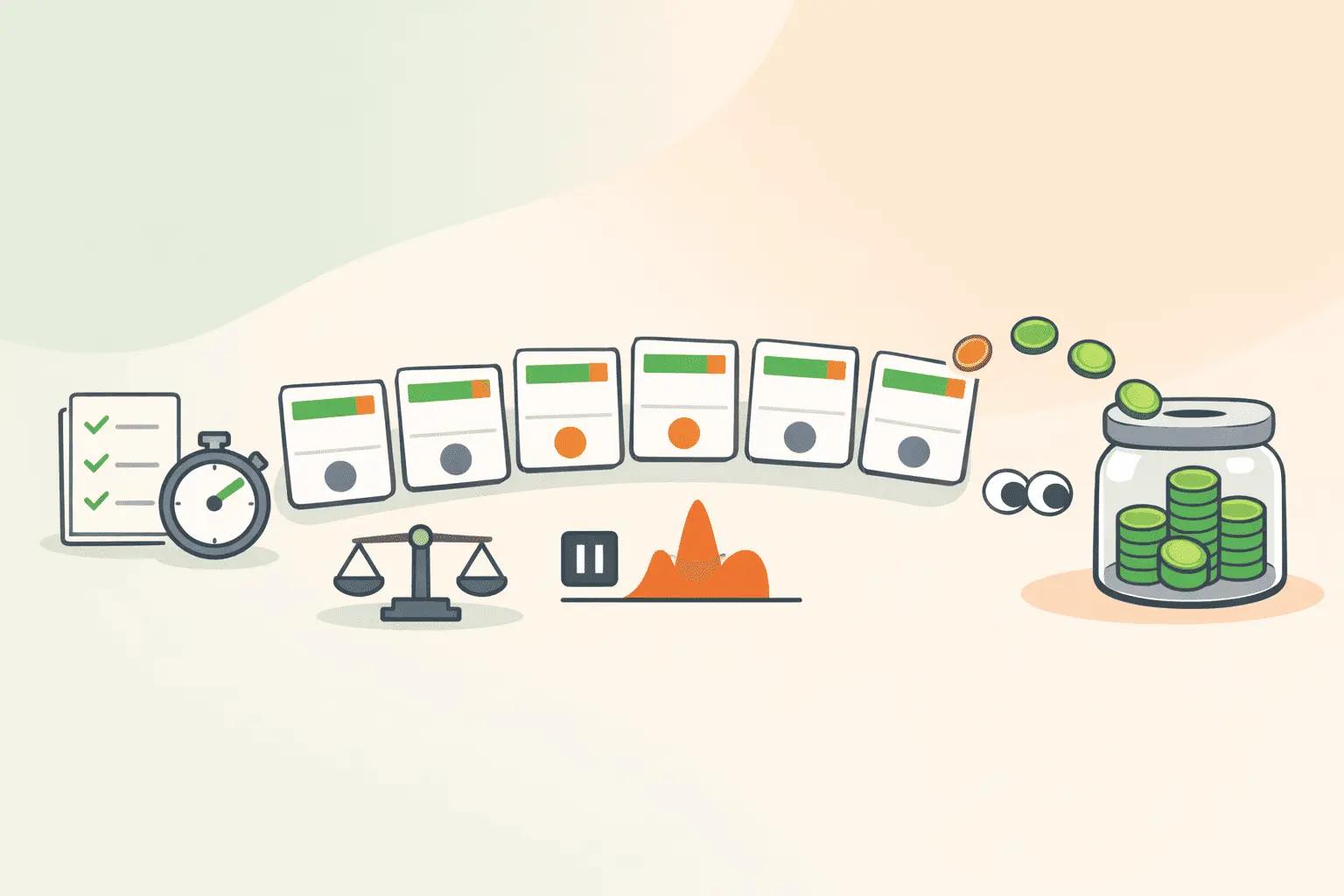
It may seem that logging every purchase is unnecessary routine. But the test takes 2-5 minutes a day and quickly answers the question "do I need this at all". Here is how to run it without overload:
- Choose a normal week without vacation or big one-off expenses.
- Log all spending in 4-6 categories: food, transport, housing, health, personal purchases, subscriptions.
- In the evening, record totals without details - two minutes is enough.
- At the end of the week, total each category and mark the 3 biggest purchases.
- Ask yourself: is there more clarity, and is the anxiety about "where it all went" lower?
- Decide: if tracking helped, continue; if not, keep one limiter from the next section.
Tip: log spending at checkout, otherwise it fades fast.
When you can skip tracking and what to use instead
It feels like tracking is for everyone. But if income is stable, spending repeats, and you already have a 1-2 month buffer, you can use light rules instead of full tracking.
- Once a week, check your balance and the 3 largest expenses.
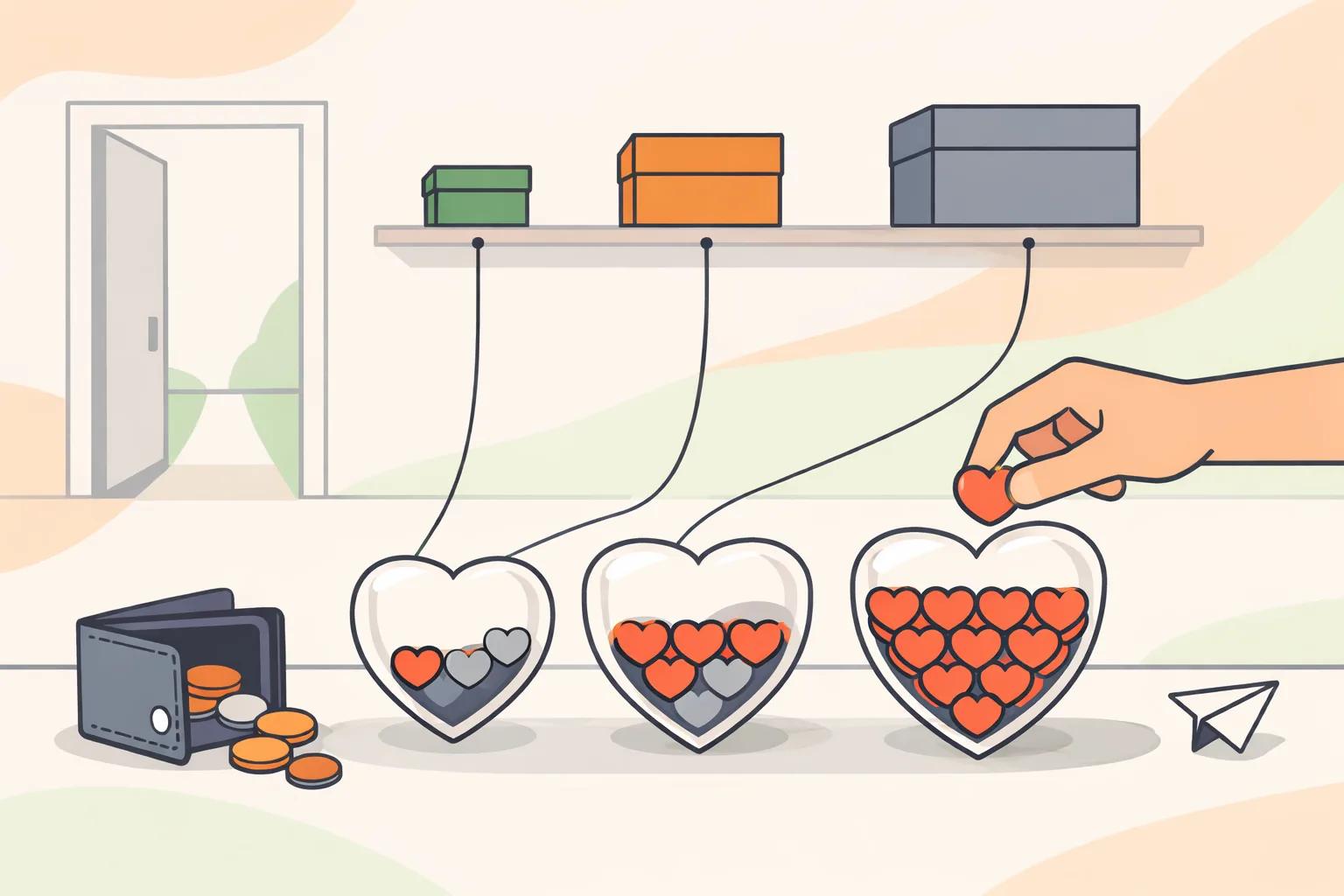
- Separate cards or accounts for goals: housing, savings, daily spending.
- Set a weekly cap for "small stuff" so it does not sprawl.
- Log only big purchases and required payments.
Pick one substitute and test it for a week.
Minimal tracking without overload: three solutions
How many categories to keep so you do not get lost in a week
For a start, 8-12 categories are enough. Split them into two groups so the list does not sprawl.
Base categories:
- housing
- food
- transport
- health
- kids
Flexible categories:
- subscriptions
- home and household
- personal purchases
- savings
- other
The "other" category is like a closet for everything. It is convenient until you need to find something. Freeze your categories for a month to see the pattern.
How to choose a format that does not annoy you
You need a format that takes under 5 minutes and does not push you away. Compare options and pick the one that does not require willpower.
| Option | Who it fits | Killer feature | Main drawback |
|---|---|---|---|
| App | People who want speed | Auto-categories and reminders | Hard to tailor to your rules |
| Spreadsheet | People who like detail | Flexible structure and formulas | Requires manual entry |
| Notes | People who are just starting | Low barrier to entry | Almost no analytics |
Pick one format and stick with it for a week without switching.
How often to review results and what exactly
Do you need daily reports? No. Ten minutes once a week is enough.
- compare plan vs actual for key categories
- mark the 3 largest purchases of the week
- adjust limits for the next week
Set a reminder for a convenient day and time.
Mistakes that break tracking - and quick fixes
- Too many categories: cut to 8-12 and move the rest to "other" for now.
- Logging once a week: move 2-3 minutes to the evening while expenses are fresh.
- "Other" keeps growing: split it into 2-3 clear subitems.
- Tracking without a goal: define one result for the month.
- No rules in a couple: agree on limits and who is responsible.
Fix one mistake first and the effect will be more visible.
Where to go next if tracking clicks
Want stronger control and deeper numbers? These materials help:
Open one material and take one practice for a week.

Which expense category blurs most often for you? Today pick one and set a weekly limit.
Checklist: what to do today and over the next week
Do today:
- State your tracking goal in one sentence.
- Enter all expenses for the day, even small ones.
- Choose 8-12 categories and remove the rest.
Over the next week:
- Run the 7-day test without skips.
- Mark the 3 biggest purchases and 2 recurring items.
- Choose a tracking format that takes up to 5 minutes a day.
- If the budget is shared, agree on rules and limits.
Check off the items and start with a simple step.
Material is for informational purposes and is not individual financial advice.
FAQ
If income and spending are predictable and you already have a 1-2 month buffer, light rules can be enough. With goals, debt, or variable income, tracking brings clarity.
A minimal format takes 2-5 minutes: record totals for 8-12 categories once a day. It takes longer only with deep analysis and many manual one-off purchases.
For a start, 8-12 categories are enough. Fewer loses meaning, more gets annoying and leads to gaps. After a month, refine the list based on actual spending.
Add them the same day or later in the week from a bank statement. The key is not to quit after one miss and to restore the rhythm the next day with a reminder.